Foldable return format
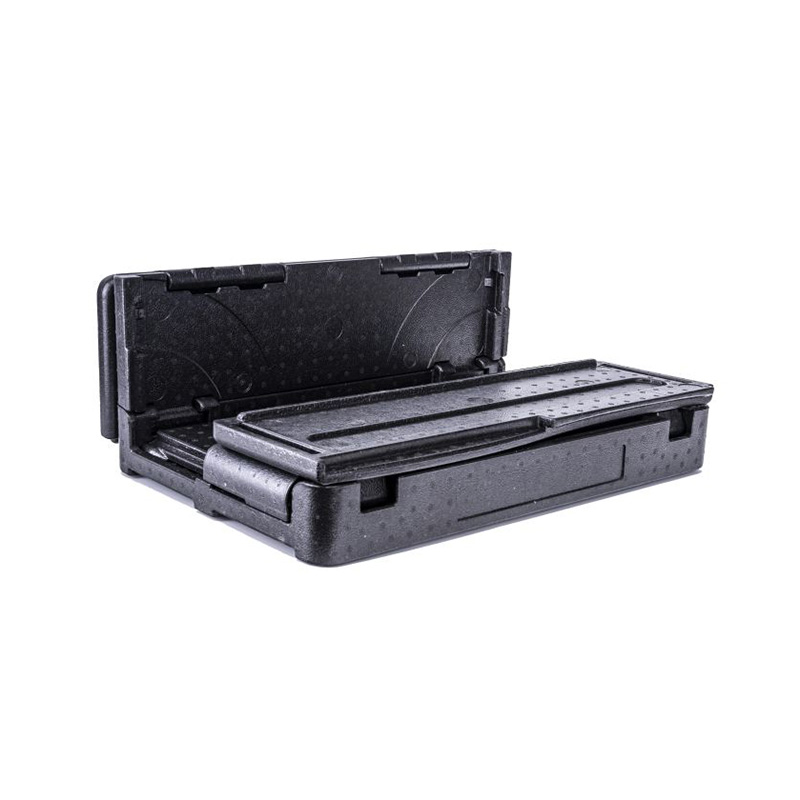
The product can be collapsed after unloading for return-route planning; confirm the exact folded envelope and handling method.
Insulated Shippers & Containers · EPP
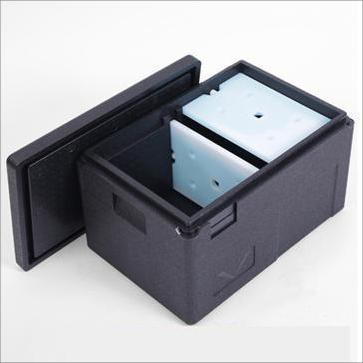
A reusable, foldable expanded polypropylene (EPP) bin for grocery and chilled-food delivery programs that need an insulated container during the route and a return-friendly format after unloading. Final size, folded dimensions, coolant layout and route performance are confirmed for each project before sampling.
Product Overview
The foldable EPP format is suited to routes where the container works as a rigid insulated bin during delivery and returns empty in a more compact form. The exact panel joints, working dimensions and folded dimensions must be approved for the selected model.
The product can be collapsed after unloading for return-route planning; confirm the exact folded envelope and handling method.
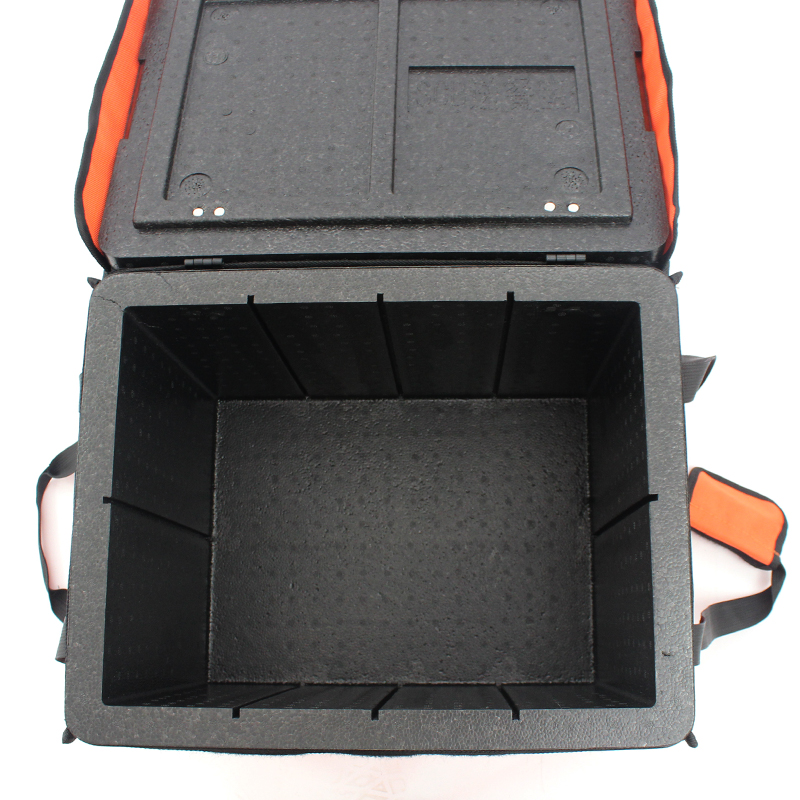
When fully opened and secured, the molded EPP structure provides an insulated outer container for the defined payload.
Coolant, liners and dividers can be selected around the product load and condensation-control requirements.
Cleaning, inspection and empty-return procedures can be specified for closed-loop grocery and food-delivery programs.
Product Parameters
Product Specifications
Capacity, panel locking, folded dimensions, load rating and fold-cycle limits vary by model. Approve the exact working and folded configuration by drawing and sample.
| Specification | Available basis | What to confirm |
|---|---|---|
| Product format | Foldable insulated cooler bin | Working assembly and folding sequence |
| Material | Expanded polypropylene foam | Grade, density and material documents |
| Capacity and dimensions | Project-specific | Usable internal, assembled outer and folded dimensions |
| Locking and lid | Model-specific | Panel engagement, lid fit and closure method |
| Coolant compatibility | Gel packs, ice bricks or PCM packs | Type, quantity, conditioning and placement |
| Liners and dividers | Project options | Payload protection and condensation control |
| Return and reuse | Cleaning and inspection plan required | Cleaning method, reuse frequency and rejection criteria |
| Thermal performance | Complete-packout test required | Complete packout and route qualification |
Use & Packout
Use the bin only in its fully assembled working position. Confirm the folding and locking method for the selected model, then load the protected payload and conditioned coolant according to an approved pattern.
Fully unfold the bin and engage the specified panels, joints and lid before any payload or coolant is added.
Check the corners, lid fit and folding areas for deformation, cracks or incomplete engagement before each route.
Reserve space for coolant, liners and dividers and separate frozen coolant from sensitive goods where the project protocol requires it.
After unloading, remove residue, clean by the approved method, dry and inspect the bin, then fold it only when empty.
Complete transport configuration
Confirm the minimum and maximum product load, any coolant or other thermal-control component used, starting conditions, closure and opening frequency, route ambient-temperature profile and transit duration in a defined complete-configuration test or qualification protocol.
These references explain industry qualification and transport practices. They do not certify this product or replace testing of your complete packout. Using an ISTA 7E profile alone does not constitute ISTA certification.
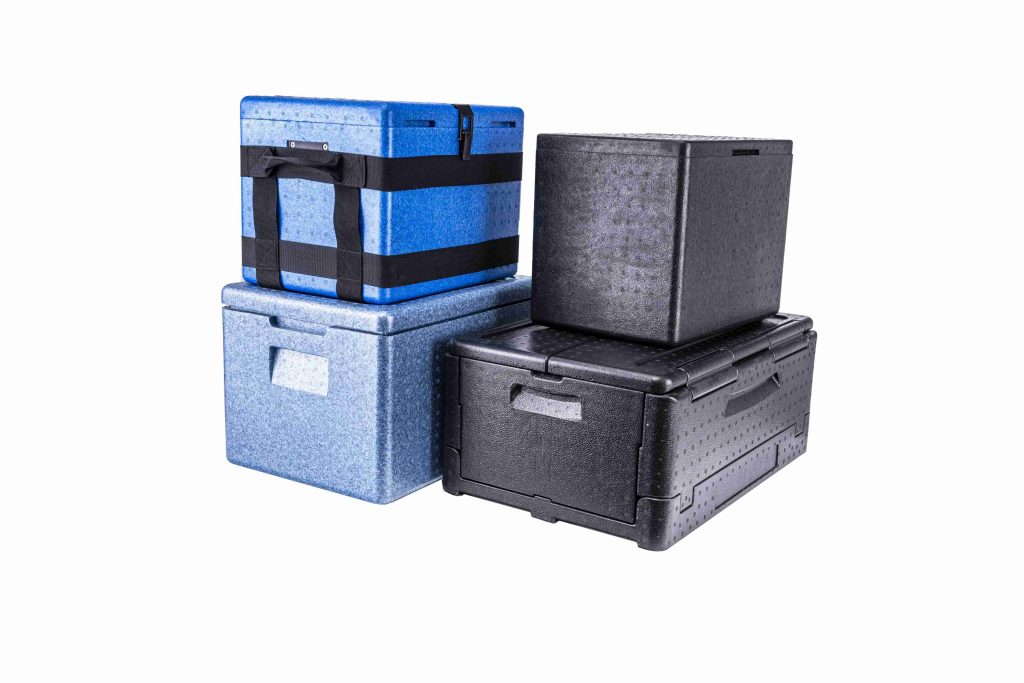
Choose from the established 380 × 380 × 220 mm, 420 × 420 × 250 mm or 600 × 400 × 250 mm moulds, or specify a dedicated footprint for a particular grocery crate or tote format.
Moulded-in colour, printed logos and label panels on the lid and side walls allow bins to be matched to retailer branding or route identification.
Removable dividers, bottle crates and tray inserts keep ambient, chilled and frozen items separated within a single delivery.
Ice pack, gel pack and PCM quantities and placement are set per route, from wall liners to a top layer held under the lid.
Panel grade and wall build are selected around the load carried and the chilled hold time the route requires.
Carton print, handling icons and product information can be branded, and bins can be supplied flat-packed for storage and return journeys.
Bin size, wall build and coolant load are combined into one specification so the packout matches the longest leg of the delivery route.
Project Configuration
Share the payload, usable internal space, required working and folded dimensions, temperature objective, route profile, coolant, liner, divider, cleaning process, branding and order quantity.
Product Documents
Available documents vary by model, material construction and project requirements. Ask us to confirm the files available for your quotation or sample.
Dimensions, capacity where applicable, layer construction, closure details and carton-packing data for the selected model.
Available layer, liner, insulation, closure and applicable material-compliance information for the selected configuration.
Product dimensions, artwork area and carton data for the selected model.
Frequently Asked Questions
Use these answers for initial selection. For ordering and packout setup, follow the specifications and instructions confirmed for your model.
Capacity, assembled dimensions and folded dimensions depend on the selected model. Confirm the required usable space and return envelope so the supplier can provide a matching drawing and sample.
The exact panel and locking arrangement must be confirmed for the selected model. Load the bin only after every panel and the lid are fully engaged.
Compare the approved assembled and folded dimensions against the vehicle, pallet or return-carton plan; the actual saving follows from those two dimensions.
Yes, as one component of a defined packout. Coolant, payload, starting conditions, route duration and ambient profile must be tested together before routine use.
Quote & Sample Request
Share the information below so our team can recommend a suitable product configuration.
Selected product
We will review a standard or custom configuration after receiving your project details.
Our response will cover the selected model, available documents and sample options.