
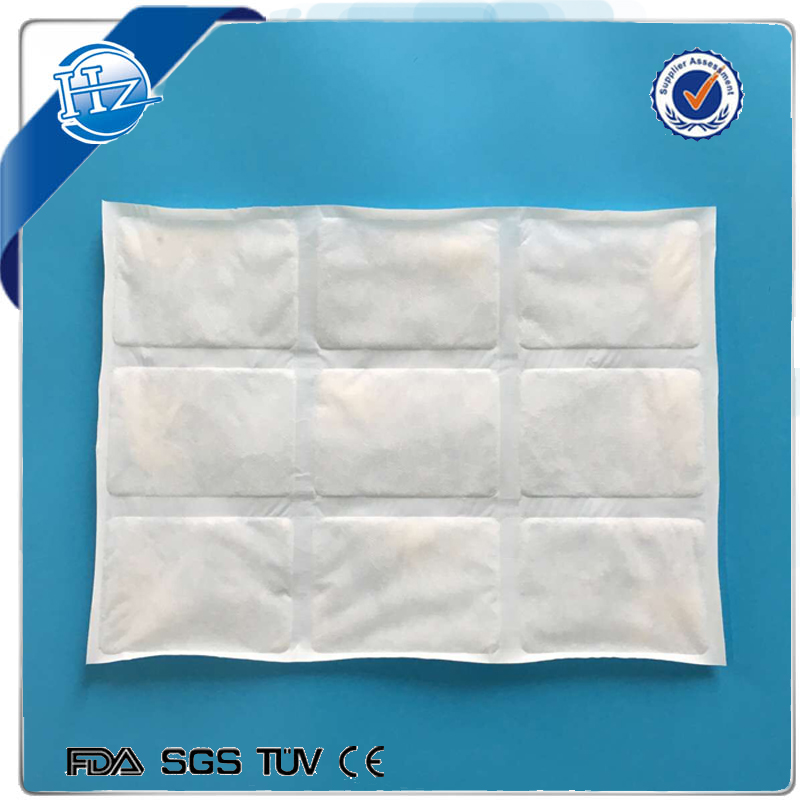
Manufacturer dry ice pack for milk shipping for Distributed and Changing Routes
A manufacturer dry ice pack for milk shipping is increasingly purchased for networks that do not look like one controlled cold room followed by one refrigerated truck. Orders may move through micro-fulfillment, parcel hubs, cross-docks, export holds, route vehicles, lockers, and doorsteps. The sheet can be useful because it stores compactly before activation and conforms around payloads, but the program succeeds only when each channel's exposure and local operating capacity are understood.
For a dairy processor, milk brand, laboratory program, distributor, or packaging buyer, this is both a packaging and a network-design decision. Sustainability, peak demand, labor, freezer recovery, supply continuity, and change control can be as decisive as laboratory cooling. Performance claims should stay tied to the packout and route rather than expanding as the product enters new channels.
Milk Shipping Scenarios Beyond the Refrigerated Truck
Hydration coolant sheets are attractive in distributed operations because they can move and store flat before activation. The operational burden is transferred to the packing site, which must supply clean water, controlled hydration, drainage, freezer capacity, racks, staging, and trained labor. That trade can be favorable, but it is not free and it becomes more visible as order volume grows.
The same sheet can appear to fit several milk channels while performing differently in each. A parcel sort network, a scheduled vehicle route, a pallet movement, and a doorstep handoff create different heat events and handling loads. The coolant should be considered a configurable component inside channel-specific packouts rather than a universal answer.
Terminology remains important when networks cross borders or transport modes. A hydrate sheet and solid carbon dioxide are not interchangeable even when both are sold with dry ice wording. Composition, packaging, labels, documentation, ventilation, and carrier acceptance should be confirmed for the actual material and route.
Common product and route cases are shown below. The categories are a prompt for segmentation. Each operator should group only shipments that have compatible payload conditions, geometry, exposure, handling, and receiving decisions.
| Product or route case | Main exposure or failure | Useful design response | Assumption to avoid |
|---|---|---|---|
| Pasteurized retail milk | Warm exposure, local freezing, cap leakage, and short shelf life | Use the labeled or approved distribution condition and buffer frozen sheets | A U.S. Grade A reference is not a universal global specification |
| Flavored or fortified milk | Formula-specific stability and package sensitivity | Use the finished-product specification, not ordinary milk assumptions | Ingredients can change viscosity, freezing behavior, and quality response |
| Milk samples | Small thermal mass and documentation needs | Use a compact mapped packout with clear chain of custody | Do not infer specimen rules from retail delivery practice |
| Shelf-stable milk before opening | Often different from refrigerated milk | Confirm whether active cooling is needed at all | Unnecessary cooling adds condensation and cost |
Channel segmentation prevents an easy commercial mistake: copying a successful packout into a new service because the outer carton looks similar. A different carrier, dwell pattern, delivery promise, or receiver can change the risk even when the product and coolant are unchanged.
Sampling, E-Commerce, and Last-Mile Handoffs
Thermal exposure often accumulates at interfaces. Goods can wait between the packing bench and pickup, between vehicles, outside a controlled dock, in a customs examination area, or at the final delivery point. Responsibility and data may also change at each interface. Map the physical event and the information handover together.
For milk, the overlooked events often include allowing a frozen sheet to rest against a bottle for the full route, packing milk that has not reached the intended dispatch condition, using a center sensor only and missing case-edge freezing, failing to account for heat stored in crates, dividers, and secondary cartons, and mixing shelf-stable and refrigerated assumptions in the same purchasing specification. A route map should identify the expected duration, environmental control, operator, evidence, and recovery action at each node. The answer may be added thermal margin, a better closure, different coolant placement, a service-level change, or a receiving alert.
Do not treat a smooth chamber profile as a perfect copy of the network. It is a controlled representation used for development or qualification. Supplement it with route observations and temperature data where appropriate. Investigate delays and partial-load behavior, then decide whether the test profile or operating controls should change.
Freezer Throughput During Daily Dispatch Peaks
Scaling a hydration sheet program moves constraints upstream. Dry inventory may be compact, yet activated inventory expands and becomes heavy. The site needs soak tanks or another controlled activation method, draining space, clean handling, freezer racks, air circulation, staging, inspection, and separation between ready, rejected, and returned material.
Model the peak hour rather than the average week. Count sheets per order, dispatch waves, freeze cycle, rack capacity, freezer recovery, operator time, safety stock, quarantine space, and rework. A promotional campaign can fail even with ample dry sheets if the freezer cannot restore the approved condition after repeated door openings.
Supply continuity should not authorize silent substitution. Define an approved bill of materials, qualified backup or second source if needed, and a review path for change. Capacity discussions should include peak carton packing, raw-material availability, production-lot size, inspection throughput, export preparation, and the lead time assumptions behind the promise.
Reuse and Sustainability on Closed Routes
Sustainability needs a system boundary large enough to reveal trade-offs. A flat dry sheet may reduce inbound cube and cold storage before activation. It still uses material, water, freezing energy, labor, protective packaging, and an end-of-use route. The insulated carton, liner, payload loss, emergency reshipment, and return movement may dominate the result.
Flat sheet inventory can reduce pre-activation storage cube, which is useful at a processor with constrained cold rooms.
Freezer energy, water use, damaged milk, bottle leakage, secondary packaging, and route returns must remain inside the boundary.
A reusable loop may be practical on controlled milk routes, but only if inspection, hygiene, drying, return timing, and performance are managed.
Need a Packaging Solution for This Application?
By Industry
Browse packaging paths by pharmaceutical, food & beverage and cold chain logistics applications.
Explore solutionsBy Temperature Range
Find configurations for 2–8°C, 15–25°C and ≤−70°C shipments.
View temperature rangesGet a Quote
Send your payload, route and holding time — we reply with a packout recommendation within 24 hours.
Avoid absolute green claims without a stated comparison and boundary. A practical internal metric can be cost, mass, energy, or waste per successful shipment that meets the product acceptance rule. Review that metric by route family and season. It rewards right-sizing while keeping product protection visible.
Supplier Continuity for a High-Frequency Product
The table turns network growth into questions for both operator and supplier. It prevents procurement from approving material while assuming that labor, freezing, traceability, and channel fit will solve themselves later.
| Network decision | Question for the operator | What the supplier must support |
|---|---|---|
| Channel | Which milk routes share the same exposure and handling? | Packout variants with clear boundaries rather than one universal claim |
| Peak volume | Can hydration, drainage, freezing, staging, and inspection keep pace? | Carton packing, supply continuity, and production-lot consistency |
| Handover | Where can a shipment wait without active temperature control? | Geometry and test evidence that reflect the actual dwell pattern |
| Season | What objective rule selects mild- and hot-weather configurations? | Stable specifications and samples for each controlled variant |
| End of use | Will packs be discarded, recovered, inspected, or reused? | Material information and a realistic handling pathway |
Supplier readiness is demonstrated through stable specifications, representative samples, lot identity, change notification, realistic capacity planning, and technical support that stays within evidence. Marketing flexibility without production discipline creates a fragile program.
Seasonal Adjustment Without Losing Control
A platform approach can serve several routes without pretending that every route is identical. Keep common elements such as the sheet family, film, activation method, and inspection controls stable. Create controlled variants for sheet count, placement, buffer, insulation, or season only when data supports them.
Each variant needs a name, drawing, selection rule, qualification basis, work instruction, training path, and change-control status. Operators should not choose a version from memory or outdoor temperature alone. Use route, product, and dispatch criteria that are available at the decision point.
Review variants after launch. Compare temperature evidence, damage, leakage, product acceptance, labor, freezer capacity, complaint patterns, and unusual dwell. Retire unnecessary configurations and investigate routes that repeatedly consume emergency margin. Controlled learning is more sustainable than permanent overpacking.
Commercial data should be organized by the same route families. Unit price alone hides activation labor, freezer congestion, extra insulation, returns, and customer-service work. Track the cost of a successful accepted delivery, then investigate why one channel or season consumes more margin. This makes optimization a cross-functional decision rather than a packaging-only exercise.
Training must travel with the program. New sites, temporary peak staff, distributors, and third-party packers need the same product identity, activation method, freeze-status check, assembly drawing, variant selection rule, and deviation path. A short visual aid is useful, but it should point back to a controlled instruction and revision. Local improvisation can erase the value of centralized qualification.
Governance should define who owns route data, who can approve a packout change, who reviews supplier notices, and who decides product disposition after an exception. Without those owners, weak signals remain scattered among procurement, operations, quality, customer service, and carriers. A regular review can combine them before a pattern becomes a larger failure.
The result is a program that can adapt without losing its evidence. New routes begin with a comparison to an existing qualified family, followed by a documented risk assessment and the testing required for the difference. The organization keeps common components where they genuinely fit, while avoiding the false economy of forcing every shipment into one configuration.
Customer communication is part of that control. Quotes, catalogs, labels, and training should describe what the component is, how it is activated, which released packouts it supports, and what the user must verify. Avoid converting a successful route result into a universal duration. Clear boundaries reduce misuse, make complaint investigation faster, and give distributors or fulfillment partners a consistent message as the network expands.
Frequently Asked Questions
Can frozen sheets be placed directly against milk bottles?
Direct placement can create a colder bottle-wall zone than the center of the case. Whether that is acceptable depends on the milk, bottle, route, and conditioning. Test a buffer or divider and monitor both the likely cold point and the expected warm point.
What temperature should milk be shipped at?
Use the product's approved storage and distribution condition and the rules that apply in the destination market. U.S. Grade A references commonly use 7 degrees Celsius or 45 degrees Fahrenheit or below for pasteurized milk, but this is not a universal specification for every milk product or jurisdiction.
Is a hydration dry ice pack the same as solid dry ice?
No assumption should be made from the name. A hydration sheet is typically water activated and frozen, whereas solid dry ice is carbon dioxide. Ask for composition and safety documentation, then confirm how the planned carrier treats the material.
How should a milk packout be temperature mapped?
Place sensors at expected warm locations, near likely cold-contact areas, and within representative product positions. Use the proposed milk load, bottle arrangement, insulation, coolant conditioning, and ambient profile. Define acceptance criteria before reviewing the data.
What changes require a new review?
Changes to bottle size, case count, sheet dimensions, absorbent media, film, hydration method, freezer process, insulation, route, carrier, seasonal profile, or receiver timing can affect performance. A quality team should decide whether document review, confirmation testing, or requalification is appropriate.
Design the Network and the Packout Together
A flexible coolant format creates value only when the surrounding network can activate, freeze, assemble, track, and recover it consistently. Segment channels, map handovers, model peak capacity, preserve supplier control, and qualify clearly named variants. That approach supports growth without turning every new route into an untested exception.
For milk, sustainability should be judged alongside successful product arrivals. Include packaging, operations, energy, returns, and avoided loss. Then optimize through controlled evidence rather than through a lighter component claim in isolation. The same route-family data can guide service promises, seasonal planning, and investment in freezer or reusable assets.