
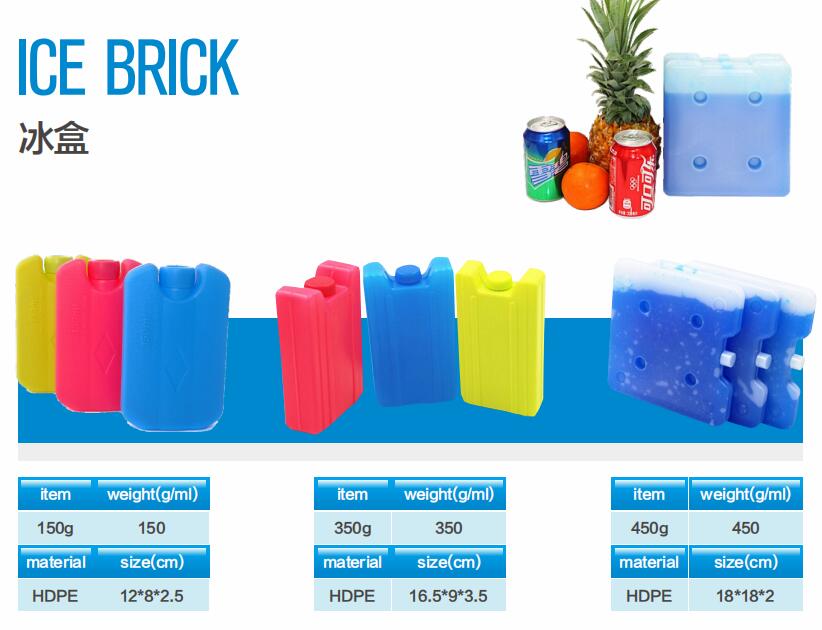
Cool Brick Wholesale Buying for Reliable Cold Chains
A cool brick wholesale order should begin with the shipment system, not a price sheet. The rigid coolant is only one component inside a passive temperature-control package. Its dimensions, thermal behavior, conditioning state, placement, insulation, payload, route, and handling time all affect the result. Buying a large quantity of a convenient shape does not make an unqualified parcel temperature controlled. For wholesalers, importers, and procurement teams, the real job is to create a repeatable product range that downstream users can select and handle without false confidence.
This guide approaches wholesale buying as a channel-design decision. It explains how to define product families, compare supplier evidence, control substitutions, support customers in different markets, and evaluate reuse without making unsupported environmental claims.
Start With the Downstream Job, Not a Generic Cooling Claim
The phrase “keeps products cold” is too vague for professional purchasing. A meal-delivery operator, diagnostic sample distributor, seafood wholesaler, and pharmacy supply company may all use rigid coolant packs, but they do not share the same risk profile. The payload may be harmed by heat, damaged by freezing, sensitive to condensation, or simply expected to arrive pleasantly chilled. Those are different jobs.
Before asking for a quotation, define the commercial use in language a technical team can work with:
What is being shipped, and what temperature requirement comes from the product owner?
Is the desired condition chilled, frozen, or a narrow controlled range?
Can the payload tolerate direct contact with a fully frozen surface?
What are the normal and delayed transit times, including packing and receiving queues?
Which insulated boxes or bags will the channel use?
Will the same brick return for another trip, or will it leave the operating network?
Who freezes, conditions, packs, cleans, inspects, and retires the units?
“Conditioning” means bringing the coolant to a defined starting state before packout. It is not necessarily the same as leaving every brick in the coldest available freezer. A freeze-sensitive medicine may require separation from frozen coolant, a different phase-change formulation, a controlled conditioning procedure, or another qualified configuration. World Health Organization vaccine guidance distinguishes among frozen, conditioned, cool, and warm water-packs because the state of the coolant can change both heat and freezing risk. That principle is useful far beyond vaccines: preparation instructions must match the payload and the tested package.
A wholesale catalog should therefore describe intended packout roles, physical compatibility, handling, and limits. It should not turn a component into a promise about an entire route. If a supplier cannot explain that distinction, downstream sales teams may inherit a claim they cannot defend.
Build a Wholesale Range Customers Can Actually Navigate
More stock-keeping units do not automatically create a better offer. An effective range gives buyers meaningful choices while keeping forecasting, replacement, and instructions manageable. Dimensions and thickness often matter as much as nominal fill volume. A flat plate may line a box wall; a compact block may fit a delivery bag; a narrow format may sit between product rows. Empty gaps, lid clearance, and payload displacement must be checked in the real container.
| Downstream scenario | Range priority | Questions to settle before listing | Common channel risk |
|---|---|---|---|
| Local food delivery | Fast, repeatable placement and easy wipe-down | Bag pocket size, route length, food separation, return process | Drivers improvise quantity or placement |
| Exported chilled foods | Carton fit, handling durability, clear instructions | Full route, border dwell, condensation, destination disposal | Delays exceed the assumed journey |
| Pharmaceutical distribution | Controlled configuration and documentation | Product range, qualification basis, monitoring, change control | Component claims are mistaken for package qualification |
| Laboratory pickup network | Compact fit and contamination controls | Sample container layout, cleaning method, leak inspection | Returned bricks enter service without inspection |
| Outdoor or retail cooler use | Simple consumer directions and safe handling | Freezer space, intended use, label language, retail packaging | Marketing language overstates duration |
The table is a catalog-planning tool, not a performance specification. A single physical brick might serve several markets, but its instructions and acceptable claims may differ. Wholesale buyers should decide whether one core range can be supported with application-specific guidance or whether separate products are needed to prevent misuse.
Also define the vocabulary used across markets. “Cool brick,” “ice brick,” “freezer block,” “coolant pack,” and “PCM plate” may refer to overlapping but not identical products. Phase-change material, or PCM, stores and releases thermal energy while changing phase around a characteristic temperature. That does not mean any PCM automatically holds a payload inside a stated range. Ask which formulation is offered, how its transition behavior is documented, and how it was used in the proposed packout.
Qualify the Supplier and the Product as Two Separate Things
Wholesale due diligence often combines company review and product review into one questionnaire. Separate them. A capable organization can still propose the wrong format, and a promising sample can still come from a supply process with weak change control.
For the supplier, examine business continuity, traceability, complaint handling, communication, export packing, document control, and the process for notifying customers before material or design changes. Do not accept a certification logo as a substitute for determining its scope, issuing body, validity, covered site, and relevance. “ISO certified” without a standard, site, and scope is not useful evidence.
For the cool brick itself, request a controlled specification. Depending on the application, it may cover outer material, nominal dimensions, fill or net mass basis, coolant type, closure construction, tolerances, label area, storage conditions, cleaning restrictions, and visible rejection criteria. Buyers should agree how a lot is identified and which records accompany a shipment. If units are supplied prefilled, establish how fill consistency and seal integrity are checked. If a design is refillable, responsibilities for water or other fill material, closure, and local preparation must be explicit.
Sampling should reproduce the operational stresses that matter. Check whether the brick fits the intended container after freezing, because shape may change. Examine corners, seams, closures, stacking, label adhesion, and the ability to clean recessed areas. Freeze and thaw samples through a planned evaluation rather than a single demonstration. Physical screening does not replace thermal qualification, but it can prevent an obviously unsuitable design from reaching that expensive stage.
Thermal evidence needs context. Ask whether results came from a component comparison or a complete package test; what container, payload, brick count, arrangement, starting conditions, ambient profile, acceptance limits, and monitoring locations were used; and whether the tested configuration matches yours. ISTA thermal standards provide recognized approaches for insulated shipping container development and parcel-environment profiles, but merely naming a standard does not prove that a listed product or your packout has passed an applicable process.
Turn Supplier Onboarding Into a Controlled Wholesale Workflow
A disciplined launch protects both the importer and the end user. It also makes later cost discussions clearer because everyone knows what has actually been approved.
Write a use brief. Record payload categories, target condition, container dimensions, normal and exceptional route time, ambient exposure, packing rate, and return model.
Shortlist physical formats. Use drawings or dimensioned samples to confirm fit, clearances, payload space, and handling ergonomics.
Review controlled evidence. Align the product specification, safety information where relevant, labeling, lot identification, and supplier change-notification process.
Screen samples. Inspect construction and run planned freeze-thaw, fit, cleaning, and handling checks appropriate to the use.
Qualify the complete packout. Test the container, coolant, payload or representative load, arrangement, conditioning, and defined ambient challenge together.
Pilot the channel. Observe real packing, staging, vehicle handoffs, receiver behavior, returns, and data retrieval before scaling.
Release sales claims and instructions. Make them no broader than the evidence. Train channel teams to distinguish a component feature from package performance.
Need a Packaging Solution for This Application?
By Industry
Browse packaging paths by pharmaceutical, food & beverage and cold chain logistics applications.
Explore solutionsBy Temperature Range
Find configurations for 2–8°C, 15–25°C and ≤−70°C shipments.
View temperature rangesGet a Quote
Send your payload, route and holding time — we reply with a packout recommendation within 24 hours.
Monitor production and field feedback. Track lots, complaints, leaks, deformation, losses, cleaning failures, and unauthorized substitutions.
The handoff between steps matters. Procurement should not approve a substitute merely because its capacity and color appear identical. Quality should not approve a packout that warehouse staff cannot assemble reliably at operating speed. Sales should not convert a test duration into a universal promise for every climate and route.
For air cargo, include airline acceptance, marking, booking, security, and handover procedures in the route review. IATA temperature-control practices emphasize correct marking, documented handling instructions, and coordination among parties. A rigid coolant pack that is not itself restricted cargo can still be part of a shipment subject to product-specific, airline, destination, or monitoring-device requirements.
Practical Scenario: A Regional Wholesaler Serves Three Channels
Imagine a wholesaler plans to stock one medium flat cool brick for meal-kit companies, laboratories, and medicine distributors. The product fits the most common insulated box, and one purchase order appears simpler than three. The problem emerges when operating details are mapped.
Meal-kit customers run short local routes and often lose packaging at consumers’ homes. They need simple placement, food-compatible handling information, and a cost model that assumes limited recovery. Laboratories use a closed pickup loop, but returned bricks may be exposed to leaking sample containers; cleanability and quarantine rules become central. Medicine distributors require a product-specific packout with controlled conditioning, separation, monitoring, and change approval. The same brick might remain physically suitable, yet the programs cannot share one undifferentiated instruction sheet.
The wholesaler creates three application records. Each references the same controlled product specification, but lists a different container, arrangement, preparation instruction, inspection rule, and approved claim. The laboratory channel adds a return bin, contamination decision tree, and retirement rule. The medicine channel prohibits substitution without review and ties replenishment lots to a change-control check. The meal-kit channel uses conservative language about chilled support rather than claiming a fixed duration.
This approach avoids pretending every application needs a unique molded product. It also avoids the opposite error: assuming one stock item produces the same outcome everywhere. The commercial value comes from managed application knowledge, not merely inventory.
Compare Total Landed and Operating Cost, Not Unit Price Alone
Wholesale economics extend beyond the invoice. Include molds or artwork if applicable, samples, testing, export cartons, pallets, freight, duties, brokerage, storage volume, freezer capacity, conditioning labor, damaged units, returns, cleaning, inspection, and disposal. A heavier brick may add cooling mass but can also reduce payload, increase freight, and slow handling. A thin low-cost shell may lower purchase price while creating leakage or retirement costs in a reuse loop.
Set commercial controls before the first large order:
Agree on the approved drawing and revision, not only a product name.
Define packaging and pallet configuration for the actual transport modes.
State which changes require written approval or requalification.
Establish a sample-retention and complaint-evidence process.
Clarify responsibilities for import documentation, labels, translations, and local rules.
Decide what incoming inspection can realistically detect and what relies on supplier controls.
Plan safety stock around route risk without inventing a universal percentage.
An importer serving the European Union should also review the Packaging and Packaging Waste Regulation with qualified advisers. Regulation (EU) 2025/40 entered into force in 2025 and is generally scheduled to apply from August 12, 2026, while different provisions and implementing measures have later dates. Its obligations depend on packaging role, material, market placement, economic-operator status, and exemptions. A cool brick may interact with a broader packaging system, but buyers should not assume that every reusable coolant component falls into the same category or target. Map the actual packaging function and verify the current text and guidance.
Make Reuse and Sustainability Claims From Operating Evidence
A reusable shell is not automatically the lower-impact choice. The answer depends on material and fill, useful life, return distance, backhaul utilization, cleaning method, drying, freezer energy, breakage, loss, contamination, and the available end-of-life route. Product protection belongs in the calculation too: preventing the loss of a temperature-sensitive payload may outweigh small packaging differences, but that benefit must be connected to demonstrated performance.
For a closed distribution loop, track rotations by unit, batch, or representative sample. Record why bricks leave service: cracks, leaks, swelling, damaged closures, unreadable identity, contamination, or simple loss. Separate technical durability from achieved reuse. A brick designed for many cycles but recovered only once is not delivering the intended reuse model.
For an open channel, investigate whether return transport is credible. If customers are geographically dispersed, a durable single material shell with a known local recycling route might be operationally preferable to a nominal return scheme that rarely happens. Do not label a filled product “recyclable” without checking whether local facilities accept the assembled item, whether it must be drained, and how the coolant should be handled.
The final wholesale decision should connect six things: a defined job, a controlled specification, a qualified packout, usable instructions, channel economics, and measured lifecycle performance. If one is missing, a low unit price can become an expensive source of claims, complaints, and rejected goods.
Frequently Asked Questions
How many cool bricks should a wholesale customer use per box?
There is no safe universal count. The answer depends on the brick’s thermal properties and starting state, insulation, internal volume, payload mass and temperature, arrangement, ambient profile, transit time, and acceptable product range. Use a qualified packout for the defined route, then give packers a visual work instruction. Adding bricks without evaluation can reduce payload space and may increase freezing risk.
Is a rigid cool brick better than a flexible gel pack?
It is better for some workflows, not all. A rigid brick can support repeatable placement, stacking, cleaning, and reuse. A flexible pack may conform around irregular products and use space differently. Compare leakage risk, fit after freezing, surface contact, conditioning, handling, and the complete package result. The material format alone does not establish temperature performance.
What documents should a wholesaler request?
Start with a controlled product specification, drawing, lot-identification method, handling and storage instructions, and applicable safety or material information. Add test reports only when their configuration and acceptance criteria are relevant. For regulated or food-contact uses, determine which declarations are legally required in the destination market. Verify the scope and validity of any claimed certification rather than collecting logos.
Can one wholesale cool brick serve food and pharmaceutical buyers?
Potentially, but the applications need separate review. Physical suitability does not make the preparation method, packout, hygiene control, claims, or documentation interchangeable. Pharmaceutical shipments commonly require tighter change control and product-specific qualification. Food programs may place different emphasis on sanitation, condensation, turnaround speed, and loss. Use controlled application instructions for each approved system.
Is buying reusable coolant always more sustainable?
No. Reuse can reduce replacement demand when units complete enough safe rotations, but return freight, cleaning, energy, loss, and end-of-life handling can change the outcome. Compare the actual network with a realistic alternative. Track recovery and retirement rather than relying on the word “reusable,” and include the ability of the packaging to protect the payload.