
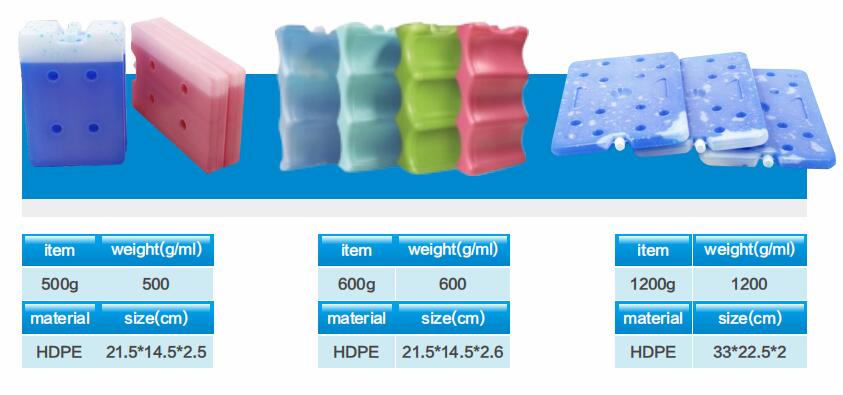
Cool Brick Transport on a Control-Tower Timeline
The control tower sees a shipment as a clock with owners. Before departure, origin controls the payload, coolant, and pack-out. After handoff, carriers control movement and escalation. At arrival, the receiver controls evidence review and storage. Effective cool brick transport connects those stages so a reusable rigid coolant remains part of the same defined system from conditioning through return. The brick can contribute stable geometry and thermal capacity; it cannot define the payload range, manage a missed connection, interpret a logger alarm, or qualify the complete shipper by itself.
T Minus One Day: Clear the Mission and the Exceptions
The first control-tower checkpoint occurs before anyone removes a brick from conditioning. Confirm the product-specific temperature requirement, freeze or overcooling sensitivity, payload load case, usable internal space, shipper configuration, service level, destination hours, and escalation contacts.
Then read the lane as a timeline. Include product picking, packing, carrier collection, depot or cross-dock dwell, road feeder segments, airport acceptance where applicable, delivery attempts, and arrival-to-storage. Mode labels alone are not enough. An air route includes road and ground events; a same-day road route can include an uncontrolled wait; a refrigerated vehicle still has door openings and last-meter transfer.
At this checkpoint, ask what could change tomorrow's journey. Weather, a public holiday, a carrier cutoff, a scheduled hub transfer, and receiver closure can alter duration or exposure. The aim is not to predict every disruption. It is to prevent a shipment from entering a service that is visibly incompatible with its approved transport plan.
The control tower should also confirm the return path for reusable assets. If the consignee has nowhere to store an empty box or the backhaul schedule has changed, fleet availability may be affected even when outbound transport succeeds. Outbound and reverse operations share the same inventory.
T Minus Two Hours: Create a Known Starting State
The origin now converts the approved design into a physical shipment. Three clocks begin to matter: payload time outside controlled storage, prepared-coolant staging, and the closed-shipper journey. Keeping them visible prevents the carrier's scheduled transit time from hiding earlier exposure.
Release the payload case
Confirm whether the load is the minimum, typical, or maximum case covered by the pack-out. A nearly empty shipper has less payload thermal mass and more free air than a full one. Staff should not fill unused space, remove coolant, or move dividers without an approved instruction.
Product categories demand different controls. Chilled food, frozen food, medicinal products, vaccines, laboratory materials, and diagnostics do not share one temperature range or one transport rule. Applicable product, food-safety, quality, biosafety, and local requirements must be identified by responsible personnel.
Release the conditioned bricks
Conditioning may mean freezing, cooling, warming, tempering, or holding the brick in a specified environment, depending on the fill and application. The equipment display does not prove that every brick core is ready. Airflow, stacking, shelf location, incoming state, recovery, and door opening influence preparation.
Separate ready bricks from returns, units awaiting cleaning, partially conditioned stock, and rejected items. Where multiple PCM formulas use similar shells, connect color or labels to a controlled product identity. “Blue brick” is not an adequate material specification.
For freeze-sensitive products, direct contact with frozen packs can create harmful local exposure. Official vaccine guidance explicitly warns about that risk in the relevant vaccine context. The wider operational lesson is to follow the product and evaluated pack-out rather than assume that a colder starting condition creates more safety.
Release the three-dimensional pack-out
Use a visual instruction that shows bottom, side, top, payload, dividers, logger, closure, and seal. Rigid bricks can support repeatability because they retain shape and can fit pockets or recesses. That advantage disappears if a brick can shift during inversion, a cap bears load, or the lid is forced shut.
Record the identity and state controls appropriate to the risk. A scan can confirm component identity, a checklist can confirm count, and a photograph can show placement. None alone proves every condition. Choose a small set of controls that addresses the important failure modes.
Handoff Zero: Transfer a Closed System and an Open Escalation Path
At carrier acceptance, the package should be closed, the tracking event visible, the destination ready, and the exception contact active. The carrier receives custody of the shipper but should not inherit an undefined obligation to “keep it cold.”
The service instruction should identify what the carrier can control: correct service level, closure, orientation where relevant, protection from damage, specified storage or vehicle conditions when agreed, tracking scans, delivery window, and escalation for delay or damage. Product-quality disposition normally remains with authorized personnel.
| Timeline event | Control-tower question | Owner | Escalation signal |
|---|---|---|---|
| Origin release | Was the approved payload and pack-out dispatched before cutoff? | Shipper | Missed cutoff, unavailable receiver, incomplete record |
| First collection | Did the carrier accept the correct closed package? | Origin and carrier | Missing scan, damaged shipper, late pickup |
| Hub or terminal arrival | Is dwell within the planned sequence? | Carrier control | Unplanned hold, route diversion, rehandling |
| Connection departure | Did the package make the expected vehicle or flight? | Carrier control | Missed connection, environment change |
| Final delivery | Is the named receiver available? | Carrier and consignee | Failed attempt, after-hours arrival |
| Receipt review | Are seal, shipment, monitor, and records usable? | Consignee and quality role | Alarm, missing data, damage, pack-out anomaly |
| Asset return | Did the empty brick and shipper enter the defined loop? | Consignee and fleet owner | Missing asset, contamination, delayed backhaul |
This timeline table does not assume live temperature visibility. It organizes the information that can trigger action. A missed connection may matter even before a logger is read because it extends the exposure clock. Conversely, a tracking scan on time does not prove the payload temperature; location and thermal data answer different questions.
In Transit: Watch Transitions, Not Mode Labels
Once the package moves, the control tower should focus on changes in environment and custody. The most important question is often “What happens next?” rather than “Where is it now?”
A road vehicle changes state throughout the day
A direct courier may maintain closed custody but still encounter traffic, parking, vehicle failure, or failed delivery. A multi-drop route opens doors and may rearrange loads repeatedly. A refrigerated truck introduces an active environment, yet its set point does not equal every payload temperature. Loading docks, door openings, airflow, spatial variation, engine-off periods, and transfer to the receiver remain part of the route.
The passive shipper and active vehicle should be evaluated for the intended relationship. In one design, the box may buffer uncontrolled transfers. In another, it may depend on the vehicle environment. The cool brick's role should be explicit rather than assumed.
Parcel transport changes orientation and dwell
Parcel networks introduce automated sorting, multiple vehicles, depots, and delivery attempts. ISTA Standard 7E provides official thermal profiles intended to evaluate external temperature exposures of individual packaged products in parcel delivery. It can support insulated shipping-container testing within that environment. It does not forecast every lane or transfer a system result to a stand-alone brick.
The control tower can watch cutoff compliance, first scan, hub dwell, connection, out-for-delivery status, and failed attempt. The packaging design must separately address mechanical restraint, cap protection, divider strength, closure, and label performance under intended conditions.
Air transport is a ground timeline with a flight inside it
An air-connected shipment may move by road to the terminal, wait for acceptance, pass security, stand on a ramp, enter an aircraft, cross another terminal, and return to road. Flight duration is only one segment. Late acceptance or a missed connection can extend ground exposure substantially.
Product type, refrigerant, airline procedure, dangerous-goods status, and local rules may affect packaging and documents. A reusable gel or PCM brick is not dry ice and should not be represented as such. Qualified transport personnel should verify the requirements for the specific shipment.
Across all modes, unplanned opening is a major transition. It exchanges internal air, changes geometry, and may move the logger or coolant. Define who may open the package, why, what must be recorded, and what review follows.
The Exception Clock: Decide Before the Delay Consumes the Margin
A control tower earns its value during the exception. The response needs to be designed before dispatch because each delay consumes time while staff search for authority.
A practical exception plan covers:
Late origin release or missed carrier cutoff.
Missing first collection scan.
Hub dwell beyond the planned sequence.
Missed road, parcel, or air connection.
Vehicle breakdown or route diversion.
Damaged outer shipper or suspected opening.
Need a Packaging Solution for This Application?
By Industry
Browse packaging paths by pharmaceutical, food & beverage and cold chain logistics applications.
Explore solutionsBy Temperature Range
Find configurations for 2–8°C, 15–25°C and ≤−70°C shipments.
View temperature rangesGet a Quote
Send your payload, route and holding time — we reply with a packout recommendation within 24 hours.
Logger status problem or temperature alarm.
Failed delivery or unavailable receiver.
Return-to-origin and temporary holding.
Loss of reusable assets or contamination on return.
For each event, name the information source, escalation owner, response window, approved holding option, and person authorized to decide the payload's next step. “Call the shipper” is not a control unless the number is staffed and the responder can act.
Do not make product disposition from tracking or coolant appearance alone. A delay does not automatically mean failure, and a partly frozen brick does not prove success. Preserve the shipper, retrieve temperature and route data, document the event, and follow the product-specific quality or safety process.
A hypothetical missed-connection timeline
Imagine a diagnostics supplier sending temperature-sensitive kits by air to service centers, with empty boxes and bricks returning by consolidated road backhaul. The control tower maps origin packing, courier collection, terminal acceptance, ramp, flight, destination terminal, final van, and receipt.
A shipment misses its planned flight after a late acceptance scan. Because the escalation rule already exists, carrier control informs the shipper, identifies the terminal holding environment, and provides the next available connection. The payload remains closed. The responsible team compares the revised timeline with the approved transport plan and decides whether to continue, recover, or hold the shipment according to its procedure.
At receipt, staff inspect the shipper, retrieve the logger record, move the product to appropriate storage, and route the evidence for review. They do not judge the shipment from the brick's physical state. The after-action review examines origin cutoff, courier timing, terminal handoff, monitor trace, pack-out record, and receiver response.
The same event exposes a return issue. Delayed outbound boxes cannot enter the scheduled road consolidation, so ready inventory at origin tightens. Fleet planning has to connect exception duration with asset availability.
Receipt, Return, and the Next Planning Cycle
Delivery is not the end of the temperature-control timeline. The receiver should be named, trained, and available. It needs a place to hold the payload, access to monitor data where used, and a clear exception path.
Begin with shipment identity, seal, arrival time, physical damage, and any required chain-of-custody record. Transfer the payload into appropriate storage according to the approved procedure. Retrieve, stop, or read the monitor correctly and preserve the data. If a logger is missing, damaged, or unreadable, follow the predetermined pathway rather than assume exposure.
A logger records its sensor location at its programmed interval and stated accuracy. It does not cool the payload, and one position may not represent every location. Mapping or qualification supports the rationale for routine placement. Alarm settings, calibration status, clock, start method, and data retrieval should all match the decision the receiver must make.
Record pack-out anomalies. A moved brick, missing divider, cracked cap, deformed box, condensation-damaged label, or logger in the wrong position can explain data and reveal a training or mechanical problem. Send those observations back to origin and the control-tower review.
For medicines and other regulated products, applicable good distribution practice and quality requirements may call for documented review, risk control, and authorized disposition. WHO guidance for time- and temperature-sensitive pharmaceutical products also treats conditioning, loading, handling, monitoring, and qualification as a connected system. A cool brick remains only a component inside that responsibility.
Return day: Operate the second transport network
Reusable cool bricks create a reverse timeline after payload receipt. The units may wait with the consignee, move on backhaul, enter dirty storage, undergo inspection and cleaning, dry, condition, and return to ready stock. If any stage lacks an owner, the fleet will accumulate in the wrong state.
Count inventory by status, not only total purchase quantity:
Ready for dispatch.
Packed or moving outbound.
Held at destination.
Moving back.
Awaiting inspection or cleaning.
Conditioning.
Quarantined or retired.
Define retirement criteria for cracks, bulging, leakage, cap damage, unreadable identity, persistent residue, or other abnormal conditions. Cleaning must be compatible with the shell, cap, label, and containment. Do not promise a fixed reuse count without evidence for the actual handling and sanitation process.
Sustainability is also a timeline question. Reuse can support source reduction, but a route-specific assessment includes manufacture, outbound weight, return transport, washing, drying, conditioning energy, loss, replacement, and end-of-life. A local backhaul using existing capacity differs from a dedicated long-distance return.
Track successful uses, turnaround time, return rate, loss, damage source, cleaning exceptions, emergency replacement, and conditioning demand. Compare the reusable and realistic alternative systems per successful delivery rather than per object. This creates a defensible basis for environmental and economic decisions without speculative savings figures.
After-action priorities for the next planning cycle
The after-action review closes one route and prepares the next. Current transport programs can make meaningful progress without relying on unverified market forecasts.
First, connect component identity with pack-out identity. Custom shell color, labels, or molded shape can help operators distinguish bricks and place them consistently, but the controls should link to a product code, formula, approved drawing, and inventory record.
Second, match data to decisions. Location, temperature, seal, and chain-of-custody data can improve visibility only when clocks align, devices are suitable, alerts have owners, and actions are predefined. More alerts are not better if no one can interpret or resolve them.
Third, review the lane when a handover changes. A new depot, delivery window, aircraft connection, courier, or backhaul schedule may change duration or exposure. Apply risk-based change control and decide whether the existing evidence remains appropriate, focused monitoring is needed, or the pack-out requires further evaluation.
Fourth, design controlled alternatives before disruption. If a brick, container, route, or conditioning unit becomes unavailable, a preassessed alternative is safer than an informal “same-size” substitution. Similar geometry does not prove the same formula or thermal behavior.
Finally, judge reuse by actual circulation. Fleet data, not an ideal cycle count, should drive purchasing, return design, and sustainability statements. The strongest current direction is not a new component claim; it is better coordination at the interfaces among origin, carrier, receiver, and reverse logistics.
Control-Tower Questions
What if the carrier changes the route after qualification?
Assess whether the change affects duration, ambient exposure, handling, handovers, or receipt. A routing-code update may be immaterial, while a new depot, weekend schedule, or uncontrolled transfer can change the risk. Use documented change control to decide whether existing evidence remains adequate or whether route monitoring or further evaluation is needed.
What should the control tower watch without live temperature data?
Watch time and custody signals that can change exposure: origin cutoff, pickup, hub arrival, connection, dwell, delivery attempt, and receiver availability. These events cannot prove payload temperature, but they can trigger early escalation. The logger or receiving record later provides thermal evidence according to the approved process.
How should a reusable brick be retired?
Use objective inspection criteria based on the product and process. Cracks, bulging, leakage, cap damage, unreadable identification, persistent contamination, or abnormal condition may require segregation. Confirm cleaning compatibility and the appropriate local end-of-life route for the shell and contents. A questionable unit should not return to conditioning by default.
Conclusion: Control the Clock and the Custody
Cool brick transport becomes manageable when the route is treated as a timeline with named owners. Origin creates the known starting state. The first handoff transfers a closed system and an open escalation path. The control tower watches connections and dwell. Receipt converts records into a product decision, and reverse logistics returns serviceable assets to ready stock.
The rigid brick supports this timeline through thermal capacity, stable placement, and repeatable handling. It does not replace insulation, qualification, monitoring, carrier control, or product-specific review. The reliable outcome comes from controlling each transition before the clock exposes a hidden gap.