
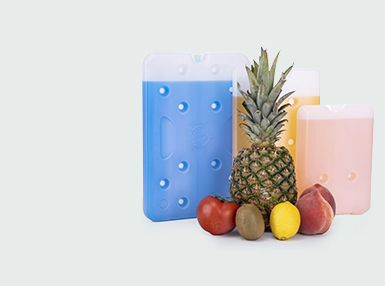
Cool Brick Pharmaceutical Use Across Routes, Handoffs, and Reuse Programs
At 4 p.m., a packed parcel can be within its target range and still be headed for trouble. It may wait for a late collection, cross an uncontrolled hub overnight, or arrive where nobody is authorized to review its logger. A cool brick pharmaceutical component can add reusable thermal mass and a consistent pack layout, but it cannot repair a weak handoff or make one configuration suitable for every medicine. Current cold-chain practice is increasingly evidence-led: teams connect product requirements, lane data, pack-out qualification, monitoring, receiving, and reuse records rather than buying coolant by a stand-alone duration claim. That operational chain is where rigid bricks either earn their place or become extra weight.
One Component, Several Pharmaceutical Workflows
Rigid coolant plates appear in very different distribution settings. A controlled wholesaler movement, a direct-to-site parcel, a clinical-trial supply, and a hospital replenishment route do not share identical payloads, oversight, or delay risks. Nor do they automatically share a temperature range. Many refrigerated medicinal-product flows use 2°C to 8°C, but requirements remain product-specific; frozen, controlled room-temperature, and other conditions may apply.
| Workflow | Why a rigid brick may fit | Risk that still needs a system control |
|---|---|---|
| Repeated depot-to-clinic route | Stable geometry can support a consistent pack sequence | Return delay, cleaning status, and seasonal route change |
| Parcel shipment to a research site | Hard plates can be placed in a documented wall pattern | Hub dwell, minimum payload, and receiving availability |
| Wholesaler replenishment | Reusable units may suit a closed or managed loop | Component identity, count, inspection, and reverse logistics |
| Clinical supply with variable kit count | Modular brick positions may help defined load cases | Empty space, freeze sensitivity, and protocol changes |
| Emergency replacement shipment | Predefined components can speed assembly | Unplanned lane, inadequate conditioning, and missing approval |
These are fit hypotheses, not approvals. Each workflow needs a complete insulated system whose coolant, separation, payload range, ambient challenge, duration, and monitor plan have been justified. A brick cannot independently protect every pharmaceutical, and a product page cannot establish GDP, USP, or WHO compliance.
Handoffs Often Define the Real Route
A route map should show custody and environment, not just cities. Record where the shipper leaves conditioned storage, how long it may remain on a dock, who loads it, whether vehicles or hubs are temperature managed, which delays can occur, and when the recipient assumes control. The most severe exposure can be brief and local: a sunny staging area, a cold aircraft apron, a locked delivery cage, or a weekend at a destination facility.
WHO technical material on time- and temperature-sensitive pharmaceutical products treats route profiling, transport monitoring, and shipping-container qualification as related controls. EU GDP guidance places transport in a risk-based quality system and expects acceptable conditions to be maintained. Practically, that means a seasonal profile or ISTA 7E parcel challenge can be useful, but generic testing should be connected to the intended lane. It should not be presented as a guarantee for every carrier or handoff.
Create a lane record that can be reviewed when operations change. Include nominal and credible maximum duration, seasonal conditions, modes, transfer sites, pickup cutoffs, customs or security holds, last-mile scheduling, and receiver hours. Add ownership beside each risk. A delay without an owner is merely documented vulnerability.
The receiving desk is part of thermal performance
Recipients need advance notice, unpacking instructions, a defined monitor-review step, and escalation contacts. Delivery confirmation alone does not show that a temperature-sensitive medicine was accepted appropriately. Specify whether the payload remains quarantined until data review, how missing or damaged monitors are handled, and who may make a disposition decision.
Coolant condition can provide useful observations but is not a release test. A brick that remains partly solid does not prove every product location stayed within limits; a thawed brick does not automatically prove failure. Use calibrated exposure data and product-specific quality assessment.
Operational Trends With Practical Consequences
Several current practices affect how buyers evaluate reusable bricks without requiring speculative market forecasts.
Evidence is moving closer to procurement. Quality and packaging teams increasingly ask for drawings, material identification, component tolerances, test context, conditioning instructions, and change-notification terms before supplier approval. The shift is useful because a low unit price cannot compensate for evidence that applies to another shipper or payload.
Pack-outs are becoming more modular, but only within tested boundaries. Teams may qualify defined coolant positions or payload families to serve recurring orders. Modular does not mean freely adjustable. The approved matrix should state which brick count, spacer, payload arrangement, and conditioning state belong to each configuration.
Monitoring data are being used to improve lanes, not just close deviations. Trend review can identify repeat dwell points, seasonal bias, packing variation, or receivers who retrieve data late. A logger still does not control temperature, and more data do not help unless someone reviews them using established responsibilities.
Sustainability claims face more operational scrutiny. Reusable plastic components may reduce consumption of single-use coolant packs on a closed loop, yet return freight, washing, loss, damage, storage, and eventual disposal affect the result. Buyers are asking where reuse actually occurs and what evidence supports the comparison.
Change control is extending to packaging components. A modified cap, pigment, mold, fill formula, or carton configuration can be operationally or thermally relevant. Supplier and buyer should agree on the information needed before a change enters production.
None of these practices creates a new universal rule. They reflect a more mature question: can the organization operate the qualified system repeatedly and show what happened when conditions departed from plan?
Reuse Is a Managed Loop, Not a Material Attribute
“Reusable” describes possibility. A reuse program exists only when bricks return, can be identified, pass inspection, are cleaned by a compatible method, are conditioned correctly, and re-enter an approved pack-out. Open distribution networks may lose too many components or require inefficient returns. Closed depot routes can make recovery easier, but they still need space, labor, hygiene controls, and status segregation.
Design the loop before estimating environmental or financial benefits:
Issue: record the brick type, quantity, and shipment or asset identifier when appropriate.
Recover: define who separates coolant from waste and where returned units travel.
Need a Packaging Solution for This Application?
By Industry
Browse packaging paths by pharmaceutical, food & beverage and cold chain logistics applications.
Explore solutionsBy Temperature Range
Find configurations for 2–8°C, 15–25°C and ≤−70°C shipments.
View temperature rangesGet a Quote
Send your payload, route and holding time — we reply with a packout recommendation within 24 hours.
Inspect: reject leakage, cap damage, swelling, severe deformation, contamination, illegible identity, or other conditions defined by procedure.
Clean and dry: use a method shown to be compatible with shell, cap, label, and fill containment.
Segregate status: distinguish dirty, clean, damaged, conditioned, and ready-to-use units.
Recondition: follow the approved equipment loading and time-temperature procedure.
Retire: document removal and applicable disposal routes rather than returning doubtful units to stock.
The specific acceptance criteria should come from the component information, risk assessment, and your quality procedures. Do not invent a fixed number of reuse cycles. Physical history, chemical compatibility, handling severity, and design vary, so a universal cycle claim would be misleading.
Sustainability Requires a Boundary and a Baseline
A comparison is meaningful only when its boundary is stated. Are you comparing one reusable brick with a flexible single-use coolant pack, or two complete shipping systems? Does the assessment include molding, fill, outbound mass, return transport, cleaning energy and water, loss replacement, secondary packing, and end-of-life handling? Does each alternative provide equivalent thermal performance for the same payload and lane?
Rigid plates can support dense, repeatable loading and may remain in service over multiple turns. They can also add tare mass and consume return volume. Custom shapes may improve shipper utilization but make the asset less transferable to other programs. Durable labels can improve traceability, yet labels and pigments may complicate local material recovery. A lower-waste claim should therefore be tied to a defined program, not to HDPE or PCM as isolated words.
The best first metric is often operational: recovery rate by lane, rejection reasons, average turnaround time, cleaning burden, and component loss. Those observations show whether a loop exists in practice. Only then can a broader lifecycle study use realistic assumptions. Sustainability should never justify a thermally weaker configuration; equivalent product protection is the entry condition for comparison.
A Hypothetical Closed-Loop Decision
Imagine a pharmaceutical distributor serving a fixed group of clinics from one depot. The medicine in this hypothetical example has an approved refrigerated transport condition, and the existing qualified shipper uses disposable flexible coolant packs. The distributor is considering rigid reusable plates to reduce packing variation and routine waste. No duration, saving, or performance outcome is assumed.
The team first maps return opportunities. Some clinics receive the next delivery on a predictable schedule and can hand back cleaned outer containers and segregated bricks. Others use third-party couriers and have no return storage. Rather than declaring a network-wide conversion, the distributor selects the closed routes for a controlled pilot.
Packaging engineering develops a new configuration because exchanging coolant formats is a system change. Freeze-sensitive positions, minimum and maximum payloads, conditioning capacity, summer and winter exposures, and delay allowance are evaluated. Quality approves inspection, cleaning, traceability, and deviation procedures. Operations measures returns, damaged units, turnaround, freezer loading, and packing errors.
The pilot could support expansion, revision, or rejection. A high recovery rate would not excuse thermal failures; excellent qualification results would not prove that return transport is sustainable. The decision uses both evidence streams and records which lane characteristics make reuse workable.
Prevent Drift After the First Successful Season
Routine performance can erode quietly. Staff may substitute a similar brick, reduce conditioning time during peaks, omit a separator, add an unqualified payload size, or stage parcels earlier. Carriers change hubs and cutoffs. Receivers change hours. Reusable shells accumulate damage. A periodic review should look for these changes before an excursion trend becomes the first warning.
Run a practical readiness check before each high-risk season or major volume change. Observe a packer using current production components, time the transfer from conditioning equipment to closure, and verify that the approved load cases can be assembled without improvisation. Confirm freezer capacity with realistic spacing, not an empty-unit assumption. Send a test pre-alert to representative receivers and verify that contacts, download tools, passwords where applicable, and quarantine space remain available. Review courier cutoffs and holiday calendars with the lane owner. This exercise is not a substitute for qualification; it tests whether the surrounding operation can still reproduce and act on the qualified design. Record gaps as corrective actions with owners and due dates.
Useful review inputs include temperature records, lane duration, alarm frequency, packing deviations, component rejects, loss and recovery, supplier change notices, complaints, and receiving delays. Examine warm and cold risks separately. If monitoring shows consistent margin, do not casually remove coolant; if it shows a recurring local extreme, do not hide it with an average.
Formal change control should assess new routes, carriers, payloads, shippers, bricks, PCM formulas, separators, conditioning equipment, monitor positions, and work instructions. The assessment can determine whether documented rationale, verification, or requalification is appropriate. Records should preserve the relationship between the unit shipped and the configuration approved.
Questions From Operations and Sustainability Teams
Is an HDPE ice brick automatically recyclable?
No. HDPE identifies a shell material, not the recyclability of a complete filled component in every location. Fill chemistry, cap, labels, contamination, disassembly, and local acceptance rules matter. Ask the supplier for material information and check available recovery routes. Do not use a recycling symbol as proof that a closed-loop program will recover the item.
Can a qualified single-use pack-out be converted to reusable bricks without testing?
That substitution can change coolant energy, geometry, contact area, airflow, conditioning, payload space, and total mass. Treat it through change control. A documented technical assessment should determine the verification or requalification needed for the complete system and intended lanes.
Should every shipment carry a temperature monitor?
The monitoring strategy depends on product risk, regulation, qualification, lane history, quality agreements, and organizational procedures. Monitoring may be continuous for some flows and risk-based for others. Define device accuracy, interval, placement, activation, retrieval, and review. A logger provides evidence; it does not compensate for an inadequate pack-out.
Conclusion: Design the Route and the Return Together
Rigid pharmaceutical coolant components offer their strongest operational value on defined workflows where geometry, conditioning, recovery, and inspection can be controlled. The thermal system still needs product-specific limits, qualified pack-out evidence, lane awareness, separation for freeze-sensitive payloads, monitoring, and receiving authority. Reuse deserves the same discipline: a stated boundary, an actual return loop, compatible cleaning, asset status, and realistic end-of-life handling. Evaluate the forward shipment and the reverse journey as one process before making performance, cost, or sustainability claims.