
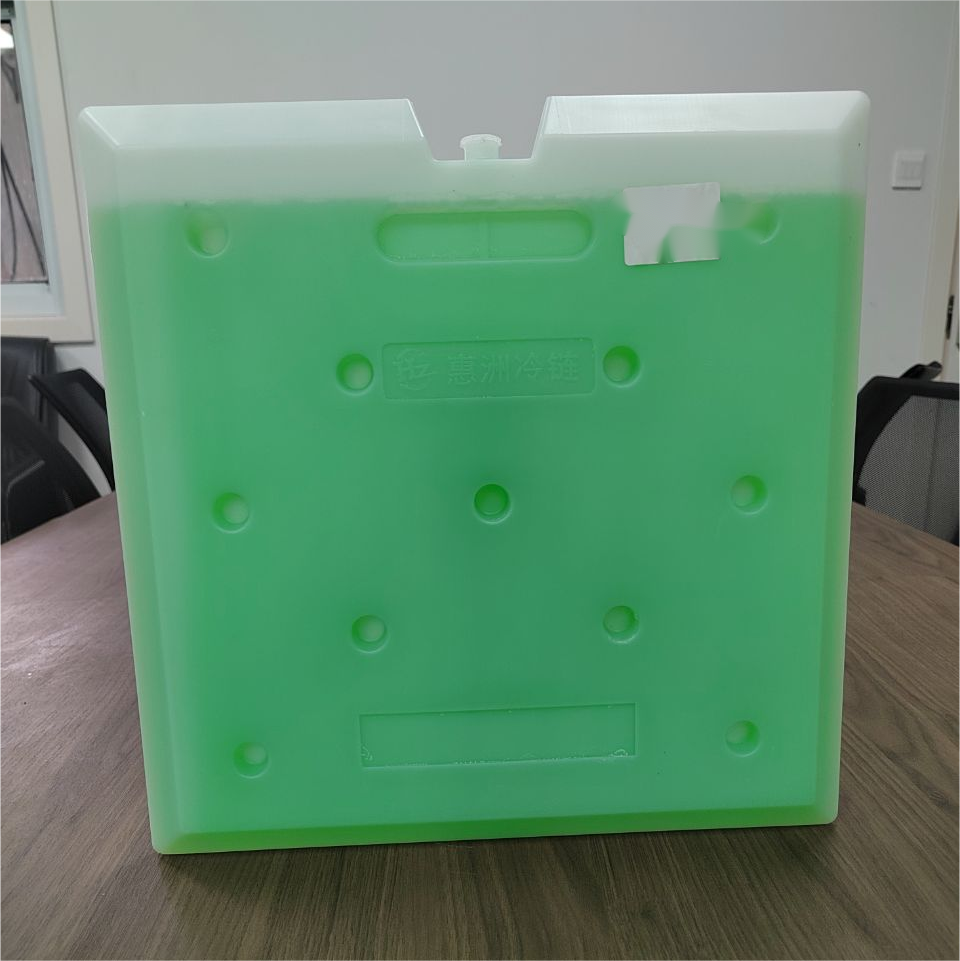
Cool Brick ODM Development With Clear Design Control
A cool brick ODM arrangement can shorten development because the supplier contributes an existing design platform, engineering knowledge, or a proposed complete component design. It can also hide critical decisions inside the supplier’s “standard solution.” If the buyer does not control requirements and evidence, the finished branded brick may fit the catalog yet fail the packout, the preparation process, or a destination-market review.
ODM changes who develops the component; it does not transfer responsibility for your cold-chain outcome. The brick remains one coolant component inside a system of insulation, payload, arrangement, conditioning, handling, route, and monitoring. An unspecified package is not temperature controlled merely because an ODM calls the coolant a particular range.
Use ODM for the Right Kind of Uncertainty
ODM is most useful when the buyer understands the application but does not need to invent every component feature. A supplier may already have shell families, closure approaches, materials, filling processes, and coolant options. Selecting and adapting that platform can avoid unnecessary tooling and bring known manufacturing constraints into the design earlier.
It is less useful when the application itself is undefined. If the buyer cannot state the payload requirement, freezing sensitivity, container, route, ambient challenge, expected delays, preparation resources, and return model, the ODM will design against assumptions. Those assumptions may later appear as unexplained exclusions in a test report or as problems on the packing line.
Start with an outcome brief that separates requirements from preferences.
Requirements might include fit within defined internal dimensions, compatibility with a controlled container, visible product identity, an inspectable closure, a specified preparation workflow, destination-language instructions, and evidence supporting a particular complete packout.
Preferences might include a brand color, a handle recess, an unusually smooth face, or a target carton count. Preferences matter commercially, but they can be traded when they interfere with thermal mass, strength, manufacturing, cleaning, freight, or cost.
Also list unknowns to be resolved. Examples include the minimum payload configuration, whether direct frozen contact is acceptable, which ambient profile represents the lane, how long bricks need to refreeze under a full load, and whether recovery is realistic. An honest uncertainty log is better than a prematurely exact specification.
Compare ODM Proposals by Their Assumptions
Two proposals may use the same capacity and price range yet embody different application models. Ask each supplier to state assumptions about the container, payload, coolant preparation, ambient exposure, handling, duration, and reuse. Then compare what is included in the design and what the buyer must validate.
| Proposal element | Questions for the ODM | Buyer’s verification | Risk if left implicit |
|---|---|---|---|
| Existing shell platform | Which dimensions, tolerances, tooling, and sites are controlled? | Prepared-state fit and production-sample review | Catalog sample differs from supply |
| Coolant formulation | What behavior, composition controls, and preparation are assumed? | Safety, market, and complete-packout assessment | Advertised range is treated as a guarantee |
| Closure and filling | How are fill amount and seal integrity controlled? | Factory review and incoming strategy | Leakage or inconsistent thermal mass |
| Test package | Which box, payload, arrangement, profile, and limits were used? | Gap analysis against intended system | Irrelevant report drives a claim |
| Branding adaptation | How do pigment, label, embossing, and finish change the design? | Legibility, material, cleaning, and fit checks | Cosmetic changes create functional drift |
| Reuse concept | What inspection, cleaning, and retirement assumptions apply? | Actual return workflow and compatibility study | “Reusable” units are lost or contaminated |
The table puts assumptions on the commercial agenda. It also clarifies when a standard platform is genuinely advantageous. If the supplier already controls a suitable shell and the changes are limited to label and carton, the project may require less design verification than a new closure or formula. That conclusion must come from evidence, not the ODM label.
Ask for alternatives with tradeoffs. A slightly different thickness may improve fit in an existing tool but reduce payload space. A standard resin color may simplify control, while a custom pigment improves selection at the pack line. A larger fill can increase thermal mass but add inbound freight and freezer load. An experienced ODM should explain these consequences without claiming that one feature solves the whole cold chain.
Keep a Buyer-Owned Technical File
The supplier may own the base design, but the buyer still needs a controlled record of what it buys and what evidence supports its use. Otherwise, a staff change or supplier dispute can leave the brand unable to distinguish approved stock from a later revision.
Your technical file should include the approved product identifier and revision, dimensioned drawing, relevant tolerances, materials and coolant definition at an agreed disclosure level, color, closure, label artwork, unit packing, master carton, lot-code format, storage and handling, preparation instructions, inspection criteria, qualification reports, deviations, and approved claims. Record which supplier site and tool or product family are covered.
Where the ODM protects proprietary formula details, the file can contain a controlled supplier specification, safety information, key functional attributes, change-notification commitments, and an independent or confidential assessment. What matters is that qualified decision-makers can evaluate changes and meet applicable duties. “Proprietary” should not become a reason to withhold all useful information.
Establish document precedence. If a catalog page, quotation, drawing, and test report disagree, the contract should state which controlled record governs. Marketing terms such as “long lasting,” “food grade,” or “for two-to-eight-degree shipping” need a defined basis and scope. A material declaration is not package qualification, and a component can be suitable for development toward a range without independently maintaining that range.
Change control must survive the ODM’s own platform updates. The supplier may improve a shared mold, switch a pigment supplier, revise a coolant, or move filling to another site for several customers. Your agreement should define which changes require prior notice, the evidence supplied, and the buyer’s approval. Link lot codes to revisions so affected inventory can be identified.
Validate the Supplier’s Design Through the Buyer’s Workflow
Design review should progress from inexpensive questions to representative proof. Begin with drawings and digital or physical fit. Then obtain production-representative samples and assess dimensions, surface, closure, fill consistency indicators, identity, stacking, and behavior after preparation. Check that the brick can be removed from the freezer rack and placed in the container with gloved or wet hands if that reflects the operation.
Thermal qualification follows the actual package. Define the acceptance range and duration from the payload requirement. Use the commercial insulation, coolant count and arrangement, preparation method, product or justified representative load, start temperatures, ambient challenge, closure, and monitoring map. Consider both heat and cold risk. For freeze-sensitive payloads, investigate locations near coolant surfaces as well as warm locations.
WHO vaccine guidance illustrates why coolant state matters by distinguishing frozen, conditioned, cool, and warm packs for different risks and conditions. An ODM commercial packout may not follow vaccine procedures, but it needs its own equally clear preparation definition. “Use frozen” is incomplete if equipment loading and conditioning determine the starting state.
Need a Packaging Solution for This Application?
By Industry
Browse packaging paths by pharmaceutical, food & beverage and cold chain logistics applications.
Explore solutionsBy Temperature Range
Find configurations for 2–8°C, 15–25°C and ≤−70°C shipments.
View temperature rangesGet a Quote
Send your payload, route and holding time — we reply with a packout recommendation within 24 hours.
ISTA thermal standards can provide recognized profiles and development approaches for insulated transport packaging, depending on the distribution channel. A supplier may use another justified method. The buyer should focus on whether the test objective, configuration, equipment, monitoring, and results answer the intended-use question.
Next, run an operational pilot. Qualification technicians assemble carefully; production staff work under time pressure. Watch product staging, brick identification, lid-open time, placement errors, separator use, monitor activation, and dispatch. Test receiver instructions and deviation response. If staff routinely alter the design, the design is not ready even if the chamber graph passes.
Practical Scenario: A Subscription Food Brand Selects an ODM Platform
Imagine a meal-subscription brand wants a thin branded cool brick for reusable delivery totes. An ODM proposes an existing flat shell, a standard coolant, and custom artwork. The sample fits the tote when empty, and the quoted adaptation appears low risk.
The brand maps the real workflow. Totes return at different times, sometimes with food residue. Bricks are frozen in stackable crates, then packed beside meals with varying fill heights. Drivers leave some totes in building lobbies. Customers occasionally keep the brick, so the reuse pool has losses. During peak days, room-temperature returns are loaded into a freezer already holding food.
The fit test is repeated after freezing and with full meal dividers. The team discovers that a proposed raised logo catches on the tote liner, while tightly stacked bricks prepare unevenly. It keeps the standard shell, moves branding to a durable flat label, and specifies an airflow-friendly freezer rack. Qualification covers representative meal loads, the lobby dwell scenario, and the actual tote closure. Instructions show placement by meal height.
The return program separates dirty and clean inventory. Staff inspect for cracks, swelling, closure damage, unreadable identity, and contamination, and they retire unsuitable units. The brand tracks actual rotations and losses before making environmental statements. Its contract requires approval before any platform material, formula, site, or dimensional change.
The ODM route still saves development effort because no new mold is needed. The savings are real precisely because the buyer tests the supplier’s platform in its own system rather than accepting the platform story unchanged.
Resolve Intellectual Property and Supply Continuity Early
ODM projects can create dependence on a supplier-owned design and tool. That may be commercially sensible, but both parties should understand the dependency. Review rights to artwork, brand elements, custom modifications, molds, drawings, test data, and derivative designs. Specify whether the ODM may sell the base or customized appearance to others and in which markets. Use legal advice for consequential terms.
Continuity planning should distinguish product availability from approved equivalence. If the original platform becomes unavailable, another shell with the same nominal capacity may have different surface area, phase behavior, fit, preparation, and package result. Identify potential alternatives, but qualify them before disruption where the application justifies it.
Ask how the supplier manages critical inputs and sub-suppliers, what notice it provides for discontinuation, and whether safety stock is held as raw material, work in process, or finished goods. Confirm promises for your actual forecast without publishing invented capacity or lead-time numbers. A staged forecast and periodic review are more reliable than a one-time assertion.
Tool maintenance can affect dimensions and surface quality over time. Define how wear is detected, repairs are documented, and post-maintenance pieces are approved. If multiple cavities or tools supply the item, preserve traceability sufficient to investigate recurring defects.
Complaint and recall cooperation should be contractual. The ODM must be able to identify affected lots, retain relevant records, support analysis, and communicate corrective action. The brand needs a distribution record and a decision process for field stock. Neither party benefits when confidential design language prevents a timely investigation.
Localize the Product Without Overstating Compliance or Sustainability
An ODM may offer a standard set of declarations, but sales markets differ. Assess the brick, coolant, labels, consumer or professional instructions, food-contact relevance, transport classification, and every packaging layer for the intended destination. Verify certification scope and avoid phrases such as “globally approved.”
For air cargo, check current airline and IATA temperature-control, marking, documentation, and device requirements for the whole shipment. For European Union supply, map Regulation (EU) 2025/40 carefully. The PPWR entered into force in 2025 and is generally scheduled to apply from August 12, 2026, while particular requirements and reuse measures have later application dates, definitions, implementing acts, and exemptions. A supplier’s recyclable or reusable claim does not settle the buyer’s legal obligations.
Environmental performance is a system question. Compare material and fill, product mass, useful durability, inbound freight, preparation energy, return logistics, wash process, contamination, loss, recycling acceptance, coolant handling, and payload protection. A supplier-designed reusable brick can perform well in a closed tote pool and poorly in a one-way consumer channel. Use actual recovery and retirement data.
The final ODM choice should leave the buyer with usable evidence, a controlled identity, a qualified packout, explicit change rights, and a practical continuity plan. If the supplier’s platform remains a black box, a quick launch may create slow problems. If responsibilities are visible, ODM can be an efficient form of collaboration.
Frequently Asked Questions
How is cool brick ODM different from OEM?
In common commercial usage, an ODM contributes or owns more of the underlying product design, while an OEM manufactures to a buyer-defined design or specification. Actual arrangements vary, so define design authority, tooling, formula control, intellectual property, testing, documentation, and changes in the contract. The acronym does not decide responsibility by itself.
Can we use an ODM’s existing thermal report?
It can inform your evaluation if the sample, container, coolant preparation, arrangement, payload, ambient profile, duration, and acceptance criteria are relevant. If your branded version or application differs, conduct a documented gap assessment and test the complete commercial configuration as needed. Do not turn a platform report into a universal performance claim.
What if the coolant formula is proprietary?
Agree on sufficient controlled information for safety, transport, regulatory assessment, functional verification, and change management. This may involve confidential disclosure to qualified personnel or a third party. At minimum, define key attributes, applicable safety documents, supplier controls, and prior-notification requirements. The buyer should not accept unreviewed formula substitutions.
Do we need a new mold for an ODM project?
Not necessarily. An existing platform may fit the application with label, color, coolant, or packing adaptations. Confirm prepared-state fit, manufacturing tolerances, branding effects, and intellectual-property terms. Use a new or modified tool only when it solves a documented requirement that the standard platform cannot meet.
Who validates the final temperature-controlled package?
The brand or product owner should ensure the commercial package is qualified for its intended use, even when the ODM performs or coordinates testing. Agree on protocol, configuration, acceptance criteria, data ownership, deviations, and report approval. Component design responsibility does not replace buyer oversight of payload protection and route risk.