
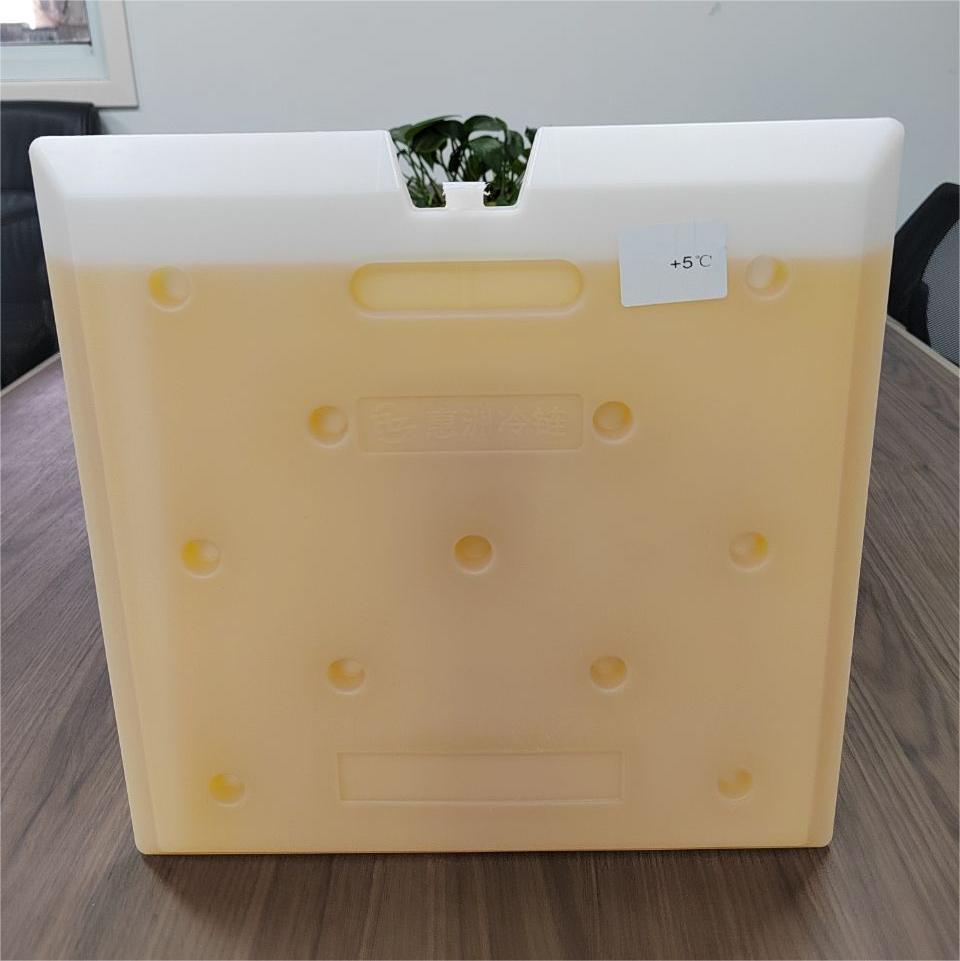
Cool Brick Distributor Selection for Stronger Channels
A capable cool brick distributor does more than move cartons from a manufacturer to a local buyer. The distributor translates a component into a controlled application: matching dimensions to containers, keeping product revisions traceable, explaining conditioning, limiting claims to evidence, and helping customers avoid unsafe substitutions. That role matters because a cool brick is only one coolant component. It does not, by itself, make an insulated parcel qualified or guarantee a temperature range for an unspecified route.
For manufacturers appointing partners and buyers choosing a local source, the same test applies. Can the distributor connect product, package, process, and market requirements without blurring their boundaries? This article provides a practical way to find out.
The Distributor Sits at the Most Important Translation Point
Cold-chain language changes as a product travels through a channel. A factory may describe shell material, coolant, nominal capacity, and dimensions. A logistics operator thinks in route time, handovers, staging, and seasonal exposure. A quality manager asks for configuration control and evidence. A buyer may simply request a brick that “lasts two days.” The distributor has to turn that request into the right questions rather than repeating a duration claim.
Strong discovery starts with the payload requirement. What condition does the product owner specify? Is freezing a risk? Which box or bag is used? How long is the full journey from preparation through receiver unpacking, including foreseeable delays? Where does the parcel sit at hubs, ramps, customs, pharmacies, kitchens, or clinics? Is a temperature monitor required, and who reviews it?
The distributor should then distinguish three layers of evidence:
Component information describes the brick, such as dimensions, construction, coolant type, preparation, and physical handling.
Package evidence concerns a defined insulated container, payload, brick arrangement, starting conditions, ambient profile, monitoring locations, and acceptance criteria.
Lane evidence shows how the approved packout is managed on a real route, including handovers, delays, and receiver actions.
Confusing these layers creates weak sales claims. A coolant phase transition is not a package temperature guarantee. A box test with one payload does not automatically cover another load or a different arrangement. A successful shipment is not proof for every season. Distributors add value when they keep those statements precise.
Screen Distributor Capability With Scenarios, Not Brochures
A product list and warehouse photographs reveal little about judgment. Use a structured scenario during evaluation. For example, describe a freeze-sensitive diagnostic product traveling in a passive shipper through a hot regional hub. Ask the candidate what information is needed before recommending a brick. A careful answer should explore the product range, direct-contact risk, insulation, coolant preparation, payload mass, route, delay allowance, package testing, monitoring, and local handling.
| Distributor capability | Evidence worth reviewing | Scenario question | Warning sign |
|---|---|---|---|
| Application discovery | Completed technical intake forms and review roles | “What must you know before proposing a format?” | Recommends only by box volume |
| Configuration control | Revision records, lot traceability, substitution procedure | “What happens when stock changes?” | Calls visually similar units equivalent |
| Local inventory management | Status labeling, storage controls, stock rotation | “How is quarantined stock separated?” | All cartons share one pick location |
| Claims discipline | Approved data sheets and sales training | “What can your team say about duration?” | Promises a range without test context |
| Field support | Packout training process and complaint intake | “How would you investigate a warm arrival?” | Replaces stock without preserving evidence |
| Market readiness | Language, labeling, import, and disposal review | “Who confirms destination requirements?” | Assumes factory documents fit every country |
The table helps compare partners on observable work rather than confident conversation. One small distributor may score well because its technical review and stock control are disciplined. A larger company may offer reach but need application training. Size alone is not the deciding factor.
Ask who can stop a sale. If commercial staff can release a new application without quality or technical review, pressure for speed may outrun evidence. Also ask how the distributor handles questions it cannot answer. Escalating to the manufacturer or a qualified packaging specialist is a strength, not a weakness.
Design the Channel Agreement Around Controlled Change
Territory and pricing usually dominate distributor negotiations, yet product change can create greater cold-chain risk. The agreement should identify the controlled specification and explain how updates move through the channel. Changes to shell resin, coolant formulation, dimensions, closure, molding location, label, unit packing, or production site may affect fit, handling, regulatory documentation, or thermal behavior.
The manufacturer needs a notification route. The distributor needs a method to identify affected inventory and customers. The end user needs enough time to assess whether documentation, sample checks, or package requalification are required. No party should treat a new color or small dimensional adjustment as automatically harmless. In a container with tight molded recesses, a minor physical change can alter placement or prevent the lid from closing correctly.
Define substitution explicitly. When a requested stock-keeping unit is unavailable, salespeople may offer a similar capacity. Capacity does not establish equivalence. The alternate may differ in surface area, thickness, phase behavior, fit, freezing time, and contact with the payload. Require a documented review before an alternate enters an approved packout.
The agreement should also allocate responsibility for:
Maintaining approved specifications and translated instructions
Tracking manufacturer lots through distributor receipts and customer shipments
Reviewing marketing claims, catalogs, and marketplace listings
Managing samples that differ from commercial production
Storing bricks before sale and protecting them from damage or contamination
Reporting complaints, retaining evidence, and coordinating investigation
Checking relevant import, packaging, food-contact, chemical, and disposal requirements
Training new branches, resellers, and sales representatives
If sub-distributors are permitted, extend the same controls to them. A disciplined first-tier partner cannot protect the brand if a reseller invents fixed-duration claims or repacks units without identity.
Local Stock Is Valuable Only When Its Status Is Trustworthy
The appeal of a distributor is often immediate availability. Availability should mean released, identifiable stock that matches the approved revision, not merely cartons on a shelf. Review receiving, inspection, segregation, environmental protection, inventory rotation, and picking controls.
Rigid coolant packs may be robust, but closures, seams, corners, labels, and surfaces can still be damaged. Warehouse conditions should prevent crushing, contamination, prolonged inappropriate exposure, and mixing of similar formats. If products are delivered prefilled, leakage or swelling should trigger quarantine. If they are shipped empty for local filling, instructions and responsibilities for fill medium, amount, closure, labeling, and quality control must be unambiguous.
Need a Packaging Solution for This Application?
By Industry
Browse packaging paths by pharmaceutical, food & beverage and cold chain logistics applications.
Explore solutionsBy Temperature Range
Find configurations for 2–8°C, 15–25°C and ≤−70°C shipments.
View temperature rangesGet a Quote
Send your payload, route and holding time — we reply with a packout recommendation within 24 hours.
Lot traceability should survive repacking. When a distributor breaks a master carton into smaller quantities, the customer still needs product identity and applicable instructions. A local label must not cover required information or create a performance claim unsupported by the manufacturer’s evidence. Translations should preserve technical meaning; “freeze before use” and “condition according to the qualified packout” are not interchangeable instructions.
Stock planning should reflect the customer base. Closed-loop food delivery may consume replacement units as bricks are lost or retired. Export customers may purchase by project. Pharmaceutical programs may require a reserved approved revision and formal review before replenishment. The distributor can use separate demand classes rather than blending all orders into one average forecast.
A shortage plan is essential. It should identify customers whose approved configurations prohibit substitution, describe the escalation path, and prevent emergency dispatch of unreviewed stock. Back orders may be inconvenient; uncontrolled replacement can invalidate a packout.
Practical Scenario: A Distributor Enters a Tropical Market
Imagine a distributor already supplies insulated food boxes and wants to add cool bricks for pharmacies, laboratories, and premium grocery delivery. It selects three rigid formats and prepares a simple catalog saying each one maintains a chilled range for a stated number of hours. The claims came from supplier test summaries, but those tests used one container, one payload, and one ambient profile.
Before launch, the team tests its customer-intake process. A laboratory uses small boxes with little clearance and needs frequent motorcycle pickups. A pharmacy distributes freeze-sensitive products through vans that make repeated stops. Grocery parcels go to consumers and rarely return. The catalog’s single duration cannot represent all three.
The distributor reorganizes the offer. The catalog lists dimensions, physical format, preparation concepts, compatible container considerations, and a clear statement that final performance depends on the complete qualified packout. Customer-facing staff use separate intake forms for product sensitivity, route, container, and return model. The laboratory receives a fit trial and a clean-return procedure. The pharmacy works through package qualification, separation from frozen surfaces, and temperature-monitor placement. Grocery buyers receive conservative chilled-support language and destination disposal information.
The distributor also creates a tropical staging rule. Frozen bricks are not left in an open loading area while other orders are assembled. Packout materials are staged together, and dispatch waves are coordinated so lids close promptly. The intervention is procedural, not promotional, but it protects the value of the product.
This scenario shows why local context matters. Ambient exposure is not only the weather profile used in a chamber. It is also the warm dock, scooter loading queue, unconditioned van, customs shed, missed connection, and receiver who opens the lid before finding storage.
Support International and Regulated Workflows Carefully
A distributor handling cross-border projects must understand roles, not offer blanket compliance. Importer, manufacturer, distributor, packer, shipper, carrier, and receiver may carry different responsibilities depending on product and jurisdiction. The required evidence may relate to the coolant component, outer packaging, food contact, transport, pharmaceutical distribution, or waste management. Ask qualified local advisers where legal interpretation is needed.
For air shipments, IATA temperature-control practices place emphasis on clear marking, handling instructions, communication, and coordination across the cargo journey. Airlines and countries can apply additional acceptance conditions. If a shipment uses dry ice, batteries, active tracking devices, or other regulated elements alongside cool bricks, review those elements separately. A distributor should never imply that the presence of a passive coolant removes the shipper’s booking, marking, documentation, or dangerous-goods obligations.
For food distribution in the United States, FDA sanitary transportation rules focus on practices that prevent food from becoming unsafe, including suitable equipment, temperature control where required, sanitation, and communication among covered parties. The exact obligations depend on the operation. A cool brick may support a suitable packout, but it does not replace written responsibilities, clean handling, or assessment after a possible temperature-control failure.
In the European Union, Regulation (EU) 2025/40 on packaging and packaging waste entered into force in 2025 and is generally scheduled to apply from August 12, 2026. Different obligations and targets take effect on different dates, with definitions and exemptions that matter. Distributors should map each packaging layer and their economic-operator role, maintain current evidence, and avoid asserting that “reusable” alone establishes compliance or environmental superiority.
Make Returns, Training, and Claims Part of Channel Performance
Distributor performance should be measured beyond revenue. Useful indicators include technical inquiries screened before quotation, training completion, lot traceability, complaint response, substitution approvals, stock discrepancies, damaged units, recovery in reuse programs, and retirement reasons. Choose measures that reveal control, not vanity metrics.
Training should be role-specific. Sales teams need boundaries for claims and discovery questions. Warehouse staff need identity, inspection, segregation, and pick rules. Customer packers need visual preparation and placement instructions. Drivers and receivers need handover, delay, damage, and escalation steps. Refresher training is appropriate when products or workflows change.
Returns require an honest hygiene plan. Inspect cracks, leakage, swelling, closure damage, unreadable identity, and contamination. A unit that returns from a laboratory, food route, or unknown customer environment may require different treatment. “Wipe clean and refreeze” is not a universal rule. Define permitted cleaning agents and temperatures from verified material compatibility, and retire units that cannot be safely restored.
Environmental claims should reflect achieved operation. Material choice, durability, return distance, backhaul use, washing, drying, freezing energy, loss rate, recycling acceptance, coolant handling, and payload protection all influence the result. A distributor with a local recovery network may enable useful rotations. A wide-open sales channel may not. Report what is measured and resist turning technical reusability into an automatic green claim.
The best distributor relationship creates controlled reach. Customers receive local stock and support, while the manufacturer retains specification discipline and learns from field conditions. Buyers gain a partner who can say both “this format may fit” and “this package still needs evaluation.” That combination is more valuable than an unconditional promise.
Frequently Asked Questions
What should I ask a cool brick distributor before buying?
Ask how it selects a format, controls product revisions and lots, prevents substitutions, stores and inspects stock, supports packout qualification, trains customers, and investigates complaints. Provide your payload, target range, container, route, delay risk, and return model. A distributor should request this context before promising performance or recommending quantity.
Can a distributor qualify my complete cold-chain package?
Some distributors may coordinate packaging studies or work with qualified laboratories, but verify their actual capability, methods, equipment, and documentation. The test must represent your complete configuration and defined acceptance criteria. A supplier’s component report is not the same as qualification of your payload, container, coolant arrangement, preparation, and distribution profile.
Is local distributor stock safer than importing directly?
It can reduce replenishment time and provide local support, but only when identity, revision, lot, storage condition, and release status are controlled. Direct and distributor supply both require due diligence. Compare landed cost, change communication, complaint handling, market documentation, and the risk of unauthorized repacking or substitution.
Should every reseller use the same marketing claims?
Claims should come from an approved source and remain within the available evidence. Application-specific claims may differ because packouts and routes differ, but resellers should not invent durations or guaranteed ranges. Provide controlled wording, translation review, and a process for technical approval. Audit marketplace listings as well as formal brochures.
Who is responsible when a shipment arrives warm?
Responsibility depends on contracts, applicable rules, and what occurred. Preserve the package, brick identity, temperature data, pack record, handover times, photographs, and condition on receipt. Investigate preparation, arrangement, payload loading, ambient exposure, delay, damage, and receiver handling. Do not assume the coolant component caused or prevented the excursion before reviewing the system.