
A Gel Brick Bag Has to Work Through Every Stop
في المستودع, an insulated bag is zipped shut with cold bricks and a full order. Forty minutes later, a driver has opened it several times, the payload is smaller, the top flap is warm, and one brick has slid to the bottom. A gel brick bag must be designed for that changing route, not only for a closed-bag laboratory photo.
Soft insulated bags are useful because they are light, قابلة للطي, and easy to carry through buildings or on bikes. They are common in grocery, وجبة, تقديم الطعام, صيدلية, and field-service operations. Their flexibility is also the challenge: walls bend, lids gap, dividers move, and workers pack different shapes each day. جامد, well-fitted bricks can add thermal mass and structure, but they cannot correct an unsuitable route or an unclosed zipper.
Decide Whether the Bag Is a Carrier, a Shipper, or a Workstation
The word “bag” hides several functions.
A delivery carrier moves unpackaged or individually packed orders on a local route and usually returns to the depot. It may open repeatedly.
A sealed parcel bag is closed for one journey and handed to a carrier or receiver. It must withstand sorting and may need an outer protective package.
A mobile workstation supports a nurse, laboratory technician, service engineer, or event team that accesses contents in the field. منظمة, يراقب, and contamination control may matter as much as duration.
A consumer cooler bag is intended for personal convenience. It should not be assumed suitable for regulated healthcare transport merely because it is insulated.
| Bag role | Typical opening pattern | Best brick-design priority | Main operational risk |
|---|---|---|---|
| Single-order meal delivery | Closed until one customer | Compact fit and leak control | Hot staging before pickup |
| Multi-drop grocery bag | الفتحات المتكررة | Divided zones and rapid access | Cumulative heat and shrinking payload |
| Pharmacy route bag | Controlled stops | الحزمة المحددة, الانفصال, والرصد | Using an unqualified consumer bag |
| Laboratory collection bag | Field access at each collection | Sample restraint and protocol-specific condition | Mixing samples, المبرد, أو الوثائق |
| Catering transport bag | Large trays and short route | Broad surface coverage and stable stacking | Lid gaps and heavy handling |
| Personal cooler bag | Informal use | Convenience and safe handling | Mistaking general cooling for validated control |
Naming the role makes supplier comparisons more honest. A foldable grocery bag and a qualified medical transport solution are not interchangeable products, even if they share an outer fabric and zipper.
Measure the Route in Openings, Not Only Minutes
Elapsed time is important, but each opening changes the internal environment. Route design should record:
time from brick conditioning to bag closure;
time a loaded bag waits before departure;
vehicle or rider exposure;
expected number and duration of openings;
amount of payload removed at each stop;
whether the bag sits in sunlight or near a heater;
time before undelivered goods return to controlled storage;
cleaning and turnaround before the next shift.
A multi-drop test can reproduce this pattern by opening the bag according to a defined schedule and removing representative payload. The final low-fill condition may be the hardest because thermal mass has fallen and empty space allows warm air movement.
One order per bag can simplify control
Where economics allow, assigning one sealed bag to one customer reduces openings and mix-ups. Drivers can remove the entire unit without searching. The trade-off is more bags, more return assets, and potentially lower vehicle utilization. Compare this with a divided route bag rather than assuming one model is always more sustainable.
Staging is part of the route
A bag packed early and left by a storefront window spends its cooling reserve before the driver begins. Establish a maximum staging time or keep completed bags in an approved controlled area. Coordinate packing with dispatch. If demand surges create long waits, fix the schedule before increasing coolant.
Fit Rigid Bricks Without Turning the Bag Into a Hard Box
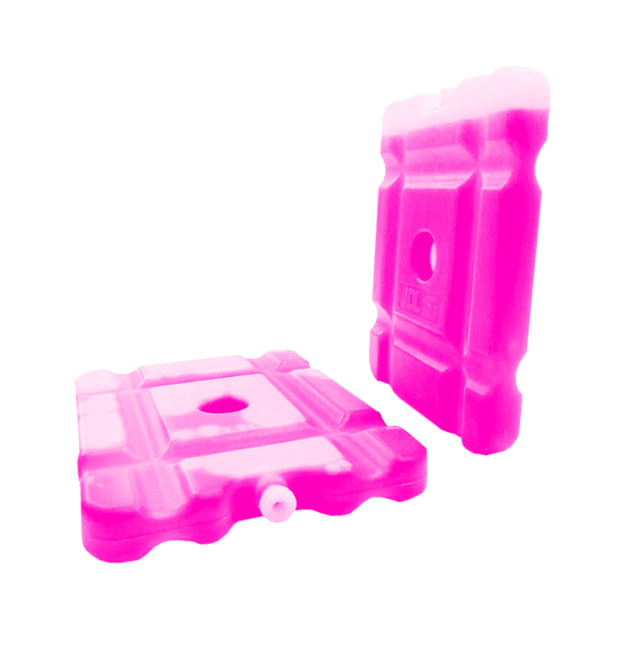
Gel bricks can sit in sleeves, جيوب, فواصل, or free positions. Integrated pockets improve repeatability and keep cold surfaces away from products. They also restrict brick dimensions and can be difficult to clean. Loose bricks are flexible but can slide, crush delicate goods, or collect at the base.
Review the filled, conditioned brick dimensions, not just nominal volume. Place prototypes in the bag and check:
whether the zipper closes without strain;
whether the brick bends or presses against seams;
whether pockets retain it when the bag is tilted;
whether a driver can remove it with gloves;
whether condensation drains or collects in a hidden layer;
whether the bag remains balanced when carried;
whether the brick blocks access to labels or orders.
Side walls, الطبقة العليا, أو قاعدة
Side bricks can create a cold boundary around the payload. A top brick may address heat entering through the lid and warm air after opening. A base brick benefits some loads but can create direct cold contact and makes the bag bottom heavy. The correct positions depend on heat flow, بناء الحقيبة, حساسية المنتج, and use pattern.
Use a pack map. “Place bricks around food” is not an instruction. Show number, pocket or position, تكييف, فاصل, ترتيب الحمولة, وخطوة الإغلاق.
بحاجة إلى حل التعبئة والتغليف لهذا التطبيق?
حسب الصناعة
تصفح مسارات التعبئة والتغليف حسب الأدوية, طعام & التطبيقات اللوجستية للمشروبات وسلسلة التبريد.
استكشاف الحلولحسب نطاق درجة الحرارة
ابحث عن التكوينات لـ 2–8°ج, 15–25°ج و ≤−70°ج- الشحنات.
عرض نطاقات درجات الحرارةاحصل على عرض أسعار
أرسل حمولتك, الطريق وعقد الوقت — نقوم بالرد بتوصية الحزمة في الداخل 24 ساعات.
Ergonomics is a thermal control
If a fully loaded bag is awkward or too heavy, workers leave out bricks, carry the lid partially open, اسحبه, or transfer orders to uninsulated containers. Include coolant mass in manual-handling assessment. Check handles, أحزمة الكتف, rider racks, backpack balance, and vehicle restraints. ولاعة, route-segmented system may outperform a heavy “maximum duration” bag because staff use it correctly.
Product Scenarios Need Different Boundaries
Hot food and chilled food should not share a cavity
Restaurants and grocery routes may carry both. A divider is not automatically enough; heat flows through it, and frequent access disrupts both sides. Use separate insulated compartments or bags when temperature conflict and route time justify it. Keep allergen, انسكاب, and hygiene procedures aligned with the delivery operation.
Produce can be cold-damaged
Frozen bricks directly against leafy greens, الأعشاب, or some fruits can cause local freezing or quality loss. Use separators and validate placement. The correct goal is product condition at delivery, not the coldest possible bag.
Pharmacy and healthcare require approved procedures
Some medicines and biological products have narrow limits and documented transport requirements. Public-health guidance distinguishes qualified packouts from ordinary food or drink coolers. استخدم المنتج's approved requirements, عملية الجودة, appropriate monitoring, and a verified transport configuration. A branded insulated bag with gel bricks is not compliance by itself.
Samples add containment and chain-of-custody needs
Laboratory or field samples may require primary and secondary containment, مادة ماصة, وضع العلامات, والانفصال. Their required condition depends on the test method. Position bricks so they do not crush or directly freeze containers unless the protocol permits. Keep documents protected from condensation.
Create a Shift-Ready Operating Routine
A reusable bag system succeeds through mundane controls. Build the shift around five zones:
Ready coolant: fully conditioned bricks identified and separated from returns.
Clean bags: جاف, تفتيشها, and assigned to the correct application.
Packing station: visual layout, فواصل, المراقبين, الأختام, and order verification.
Return quarantine: دافيء, مبتل, تالف, or contaminated components awaiting assessment.
Wash and drying: تنظيف متوافق, full drying, and documented release.
عند الإرسال, check the bag identity, عدد الطوب, حالة الحمولة, سستة أو إغلاق, ملصق, and route assignment. عند العودة, record undelivered product, temperature evidence where used, ضرر, تربة, and missing assets.
Cleaning a soft bag is not trivial
Fabric layers, طبقات, zipper tracks, رغوة, hook-and-loop closures, and removable boards can trap moisture and debris. Follow material-compatible instructions. Avoid soaking components that cannot dry internally. If an insert is removable, control its orientation and confirm it returns to the correct bag.
طعام, الرعاية الصحية, and sample programs may require different cleaning or disinfection. Segregate bag fleets where cross-use could create contamination or confusion. A bag used for raw seafood should not drift into a pharmacy route because both happen to be blue.
Inspection protects thermal performance
Look for compressed insulation, torn foil or lining, broken zippers, separated seams, damaged hook-and-loop, deformed bases, unreadable IDs, and persistent odors. A small zipper break can create a large air path. Retire or repair only under a defined procedure and reassess performance if the repair changes the thermal envelope.
Inspect bricks separately for leakage, تورم, الشقوق, seam or cap damage, تلوث, and deformation. Do not send a compromised brick back into a food or healthcare route.
Monitor What the Operation Can Act On
For low-risk short food delivery, time and process checks may be sufficient under the business's food-safety plan and applicable rules. Other products may require temperature indicators or data loggers. The decision should reflect product risk, اتفاقيات العملاء, أنظمة, التحقق من صحة الطريق, and quality policy.
A logger should represent the payload environment rather than sit against a frozen brick. Multi-drop routes can create rapid air changes, so interpret data with opening records and product behavior. Define alert response while the driver can still act: أغلق الحقيبة, move it away from heat, return to the depot, contact a pharmacist or quality representative, or quarantine goods according to procedure.
للولايات المتحدة. نقل المواد الغذائية, FDA rules emphasize preventing unsafe practices such as inadequate refrigeration and allow parties to define appropriate temperature-control arrangements. The exact applicability depends on the operation. A bag and logger should be elements of a food-safety system, not substitutes for sanitation, درجة حرارة بدء المنتج, and responsible handling.
اتجاه السوق: From Generic Bags to Managed Fleets
Urban grocery, تسليم المطعم, direct-to-patient services, and field logistics are pushing insulated bags toward fleet assets rather than promotional accessories. Buyers increasingly want replaceable parts, تحديد واضح, توافق الحزمة, الوصول للتنظيف, and data that connect a bag to a route. The value is operational: fewer missing bricks, تحميل أسرع, clearer hygiene status, and known retirement.
Customization should support those outcomes. A logo may aid ownership, but functional changes such as pocket dimensions, divider positions, closure visibility, تسميات الطريق, and stackability deserve priority. Every change that affects insulation, فجوات الهواء, or brick placement should be reviewed and, when necessary, retested.
Automation also affects bag design. Warehouses may use pick-to-light, مسح, or route cages. A bag should present labels consistently and fit carts, رفوف, دراجات نارية, or vans without compression. Technology works best when the physical workflow is already clear.
Reuse and Waste: Count the Whole Loop
Insulated bags and gel bricks are natural candidates for reuse in closed local routes. Vehicles return, assets can be consolidated, and cleaning remains under the operator'السيطرة. The environmental and cost case improves as utilization and completed cycles rise.
ما زال, reusable does not mean impact-free. Include manufacturing, طاقة الفريزر, الغسيل والتجفيف, النقل العكسي, خسارة, بصلح, ونهاية الحياة. Track bag and brick separately because their lives differ. A durable bag with frequently lost bricks may need better pocket retention; intact bricks paired with failed zippers may justify replaceable closures.
Useful fleet measures include return rate, الرحلات المكتملة, الخسارة عن طريق الطريق, wash rejection, بصلح, thermal failure, coolant mass per delivery, ونفايات المنتج. Avoid claiming “zero waste” when liners, التسميات, contaminated components, or retired insulation have no recovery path.
Packaging rules and corporate procurement are increasing scrutiny of minimization, قابلية إعادة التدوير, إعادة الاستخدام, and claim evidence. الاتحاد الأوروبي'تنطبق لائحة نفايات التعبئة والتغليف والتعبئة بشكل عام اعتبارًا من أغسطس 2026. Operators should verify how it affects the packaging they place on the market and the information they must maintain. A reuse fleet with actual records is more credible than a general statement printed on a bag.
A Practical Trial for a New Bag-and-Brick System
Select representative hot and cold days or controlled profiles, typical and low payloads, and a demanding route with multiple openings. Use the intended vehicle and staff. Record brick condition, product start temperature, وقت الحزمة, التدريج, الفتحات, internal temperatures, exterior exposure, تحمل الراحة, التسريبات, أخطاء الإغلاق, and return condition.
Ask drivers and packers specific questions: Which pocket is hard to load? When does the bag tip? Can labels be seen? Does condensation make the zipper difficult? Which divider slows order search? Convert findings into design changes, then repeat the relevant assessment.
Do not use saleable sensitive product in exploratory trials unless the protocol and risk controls permit it. Product owners and Quality should approve the method and acceptance criteria for controlled applications.
الأسئلة المتداولة
Is a gel brick better than a flexible ice pack in an insulated bag?
Rigid bricks offer stable shape, العد السهل, and predictable pocket fit. Flexible packs conform around irregular contents and can provide broad contact. The better option depends on product sensitivity, bag geometry, طريق, تكييف, تنظيف, وتعامل العمال. Compare complete layouts under the actual opening pattern rather than judging coolant formats alone.
How long will a gel brick bag stay cold?
Duration varies with insulation, brick mass and formulation, تكييف, حمولة, درجة حرارة البداية, exterior conditions, إنهاء, والفتحات. A closed-bag test is not representative of a multi-drop route unless openings are included. Define the required use cycle and verify it with representative testing or trials.
Can an insulated delivery bag carry medicine?
Only when the exact bag-and-coolant configuration is suitable under the medicine's approved requirements and the responsible quality procedure. Some programs require qualified containers, defined conditioning, يراقب, والسجلات. Do not substitute a general food-delivery bag for an approved medical packout based on appearance or a generic temperature claim.
Where should gel bricks be placed in a delivery bag?
Use the verified pack map. Depending on the design, bricks may go in lid, جانب, مقسم, or base pockets. Direct contact can freeze sensitive contents, while loose bricks can slide and unbalance the bag. Positioning should control thermal distribution and remain practical throughout the route.
How can I stop gel bricks from being lost?
Use assigned pockets, visible ownership marks, bag-level brick counts, route check-in, and driver accountability. Track loss by route and customer. In closed fleets, scan identifiers if the value and volume justify it. Design the return process to be easier than discarding or leaving the brick behind.
Are insulated gel-brick bags sustainable?
They can reduce single-use packaging in well-run return loops. The outcome depends on completed uses, efficient backhaul, تنظيف, طاقة الفريزر, خسارة, بصلح, والتخلص منها. Right-sizing and preventing product waste matter too. Report measured fleet performance rather than relying on the word reusable.
Design for the Last Stop
A reliable gel brick bag is sized for the payload, tested with realistic openings, comfortable enough to carry correctly, and managed as a clean returnable asset. The final low-fill stop deserves as much attention as the full bag leaving the depot. Clear pockets, فواصل, route rules, يراقب, and inspection turn a flexible carrier into a repeatable process.
For high-risk healthcare or sample use, apply the relevant qualified procedures and do not confuse an ordinary insulated bag with a controlled transport system.